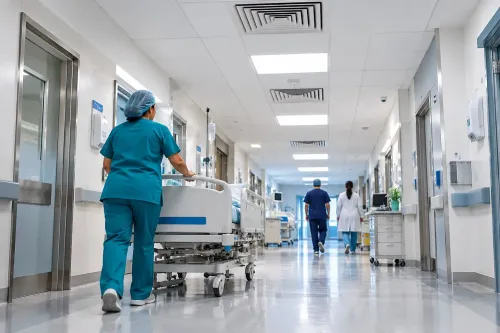
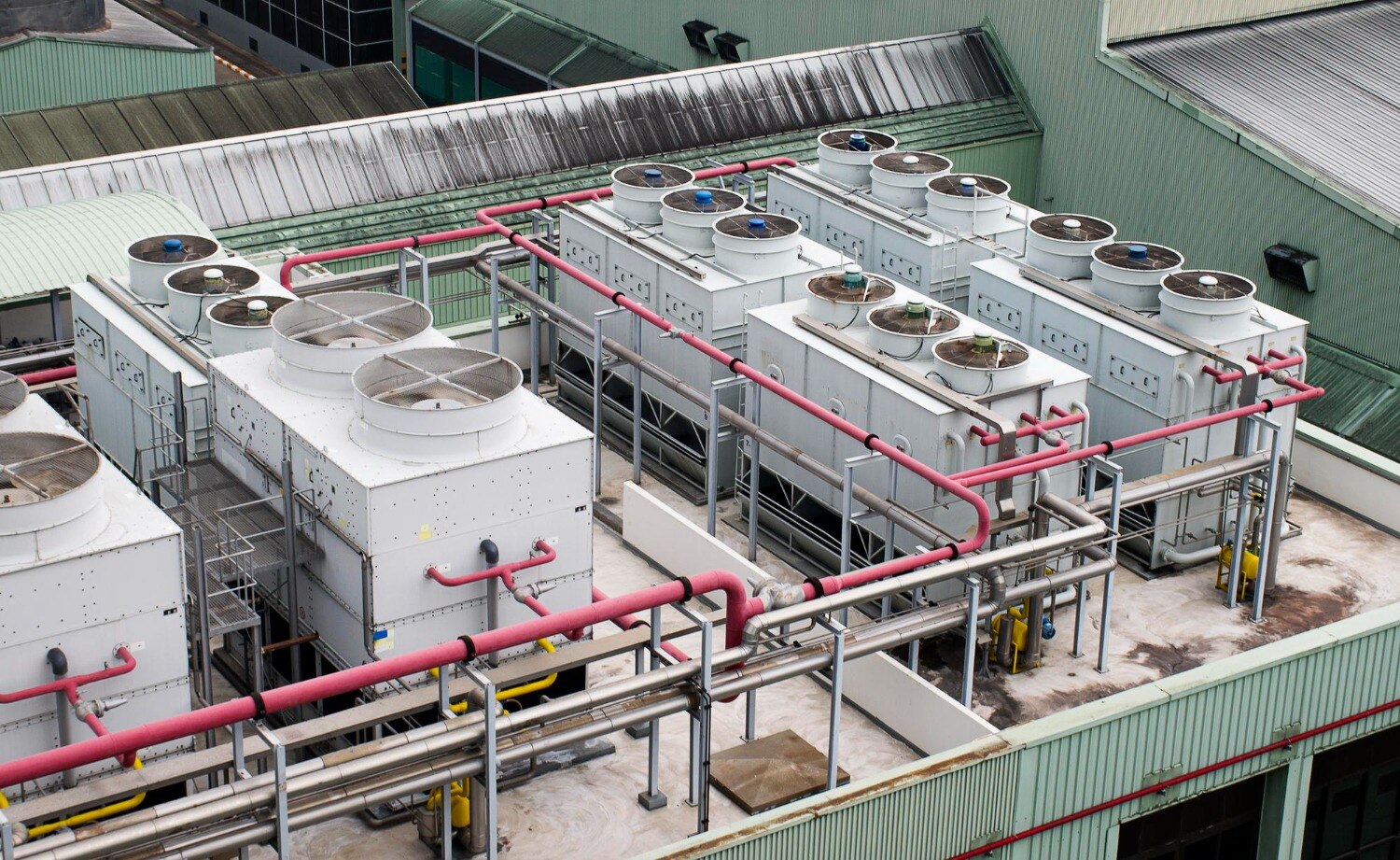
A critical HVAC application is defined by what happens when control is lost: a vaccine becomes unusable, a contaminant moves into a protected zone, or condensation damages equipment and materials. By the end, you will know which variables to control, which measurements prove performance, and how to trace each design target to a product, process, room classification or named standard.
Key takeaways
- Set temperature and humidity limits from the product or process risk.
- Design pressure cascades to control contamination and protect clean zones.
- Use calibrated sensors and commissioning tests to prove environmental control.
- Apply standards as a baseline, then design for actual operating risks.
Critical HVAC starts with the consequence of losing control
A room becomes critical when losing environmental control can harm a patient, spoil a product, invalidate a laboratory result, damage equipment or release contamination. The building type does not decide this; the consequence does. Critical HVAC applications therefore protect a defined process, product or person rather than merely making occupants comfortable.
- Vaccine storage can expose doses to stability failures.
- An operating room can allow airborne contamination to reach a surgical field.
- Pharmaceutical manufacturing can lose a validated process or batch.
- A data room can overheat servers during a cooling fault.
- A food cold chain can let product temperature exceed its approved limit.
Correct temperature control is only one part of that protection. A room can meet its temperature setpoint while high moisture condenses on a cold diffuser, damaged duct insulation or refrigerated equipment.
Humidity control therefore requires dew-point awareness and surface-temperature checks, not relative humidity alone; excess moisture supports mould, corrosion and microbial growth, while over-drying damages materials and products.
Pressure control depends on the pressure differential, airflow direction, ventilation rate and filtration. An isolation room directs air toward the room; a protective environment reverses that flow. Airlocks and anterooms limit uncontrolled mixing. A static pressure reading cannot prove containment if doors stand open, transfer grilles bypass the intended path or exhaust airflow becomes unstable.
Temperature is necessary, but it cannot show whether clean air reaches the right place or contaminants stay out.
Temperature and moisture targets must follow the product or process
A vaccine storage temperature of 2–8°C applies only when the product label specifies it; pharmaceutical manufacturing, operating rooms, laboratories, data room cooling and foods cold chain operations require different limits. Set each target from stability data, process validation and the governing room standard, then control the worst location rather than the displayed average.
1. Map temperature at hot and cold spots, near doors, during defrost and beside heat-producing equipment. Air can recover quickly after a door opening while stored vaccines or food remain out of range.
2. Control relative humidity with its limitation understood: RH changes when air temperature changes. Dew point shows when moisture will condense, while absolute humidity shows the actual water in the air. Use both when cold surfaces, sterile processes or sensitive materials matter.
3. Check surfaces as well as air. A room can meet its RH target while its dew point exceeds the temperature of a diffuser, duct defect, medicine refrigerator or cold-room panel, causing condensation, mould, corrosion or microbial growth.
4. Avoid over-drying. Excessively low moisture damages packaging, powders, timber and occupant comfort; excessive moisture undermines sterile work and laboratory HVAC performance.
Healthcare rooms do not share one humidity setpoint: CDC gives 30–60% RH as a general healthcare range, while ASHRAE Standard 170 assigns space-specific requirements. Use the applicable table for an operating room, isolation room or sterile-processing area. Investigate every excursion against approved storage conditions instead of treating one brief reading as automatic product loss.
Pressure cascades protect people, products and clean zones
A pressure cascade directs air from cleaner, safer spaces toward less clean spaces, or toward the room that must be contained. An airborne infection isolation room runs negative to adjacent areas, so air moves into the room and leaves through outdoor exhaust or HEPA filtration.
A protective environment room uses the opposite relationship, pushing filtered air outward to shield an immunocompromised patient.
The protection depends on more than a pressure reading:
- Maintain the pressure differential with supply and exhaust fans, balanced leakage paths, and monitored alarms.
- Use an anteroom airlock so opening one door does not connect the critical room directly to a corridor.
- Keep doors closed and prevent transfer grilles, cable penetrations, or propped doors from bypassing the intended airflow direction.
- Apply HEPA filtration where exhaust or recirculated air could carry infectious agents or hazardous particles.
- Verify the pattern with smoke visualization, not just a calculated air changes per hour value.
A new airborne infection isolation room, for example, uses at least 12 air changes per hour under CDC guidance; existing rooms use 6. That number does not prove containment. Short-circuiting between a diffuser and return, loaded filters, unstable exhaust, or personnel movement can leave contaminants in the occupied zone.
ISO 14644-1 classifies cleanrooms by airborne particle concentration, not pressure or temperature. Commissioning must test particle counts, airflow direction, door-opening recovery, and alarm response. Rebalance the system after filter loading or fan changes, or the original pressure cascade can quietly disappear.
Measurement and commissioning prove that the design works
A displayed value proves little unless it survives a challenge. Install a calibrated temperature sensor, humidity sensor and differential pressure transmitter at representative and worst-case locations, not only beside the thermostat. Verify airflow measurement, pressure direction and particle concentration with calibrated instruments; ISO 14644-1 classification depends on airborne particles, not pressure or temperature uniformity.
Commissioning should include:
- Run temperature mapping with multiple sensors during normal operation, door openings and defrost. Compare product probes with room air; air can recover while stored product remains out of range.
- Record a supply air and return air temperature trend log, humidity, pressure, fan status and filter differential pressure through a full operating cycle. Rising filter differential pressure with falling airflow exposes loading before the room fails.
- Simulate a failed fan, refrigeration unit or sensor. Check alarm priority, notification, safe-state operation and alarm recovery time after the fault clears.
| Event | Evidence to collect | Failure revealed | Required response |
|---|---|---|---|
| Door opening | Pressure direction, temperature mapping, airflow and recovery trend | Contamination ingress or prolonged product exposure | Alarm after the defined delay; restore airflow and investigate |
| Defrost | Room and product temperatures, humidity and duration | Warm or wet zones hidden by a fast room-air recovery | Hold or relocate affected stock; correct the defrost sequence |
| Filter loading | Filter differential pressure, airflow measurement and pressure trend | Reduced ventilation or lost pressure cascade | Service filter and rebalance before pressure failure |
| Equipment failure | Redundant sensor values, fan status and alarm log | Uncontrolled temperature, humidity or pressure drift | Transfer to standby equipment and escalate the alarm |
Use standards to set targets, then design for the real operating risk
Set each room’s operating target from its process, product and consequence of failure—not from a generic comfort setpoint. ASHRAE Standard 55 informs occupant comfort, ASHRAE Standard 62.1 informs ventilation, and ASHRAE Standard 170 supplies healthcare-space requirements; its room table takes precedence over a building-wide 30–60% relative-humidity assumption.
ISO 14644-1 classifies airborne particles, not pressure, temperature or recovery time.
Build a room-by-room compliance matrix that records:
- The target and allowable excursion for temperature, relative humidity, dew point, pressure and particles
- The source for each value: WHO vaccine storage guidance, the product’s approved stability data, ASHRAE, ISO 14644-1, and Indian building and regulatory guidance such as the National Building Code of India and CDSCO India expectations
- The alarm delay, escalation time, backup capacity and evidence required during HVAC design commissioning
Then design for the failure that causes harm. A cold store needs product-temperature monitoring because room air can recover before vaccines or food do; a cleanroom needs airflow and recovery verification because an ISO class does not prove a pressure cascade.
Redundancy, heat recovery, variable-speed drives and zoning can protect continuity and energy efficiency without weakening control.
Specialist engineering support adds value when standards conflict, the room has no simple recovery path, or regulators require defensible records. Arete Consulting Engineers can translate those requirements into a coordinated design, test plan and operating sequence.
Related products
HVAC Solutions HVAC stands for Heating, Ventilation, and Air Conditioning. It refers to the systems used for moving air between indoor and outdoor areas, along with... View product → |
Building Automation Systems (BAS) are advanced control systems that automate and monitor a building's mechanical and electrical systems, including HVAC, lighting,... View product → |
Frequently asked questions
What makes an HVAC application critical?
An HVAC application is critical when losing environmental control could harm a patient, spoil a product, invalidate a laboratory result, damage equipment or release contamination.
How should you set temperature and humidity targets?
Set targets from the product, process or person being protected, then define acceptable limits and response actions for excursions.
Why do critical facilities use pressure cascades?
Pressure cascades direct airflow from cleaner or safer areas toward less controlled areas, limiting contamination transfer and protecting products, people and clean zones.
How do you prove that a critical HVAC design works?
Use calibrated measurements, documented testing and commissioning to confirm temperature, humidity, pressure relationships and system performance under real operating conditions.
Related products
Clean Rooms/Pharma Clean Rooms are specially designed controlled environments used in the pharmaceutical industry to maintain extremely low levels of particulates,... View product → |
 | Healthcare Engineering Healthcare Consulting hospital air conditioning design |
Hospital Engg Service Hospital Engineering Services are essential for the efficient operation, safety, and functionality of healthcare facilities. View product → |