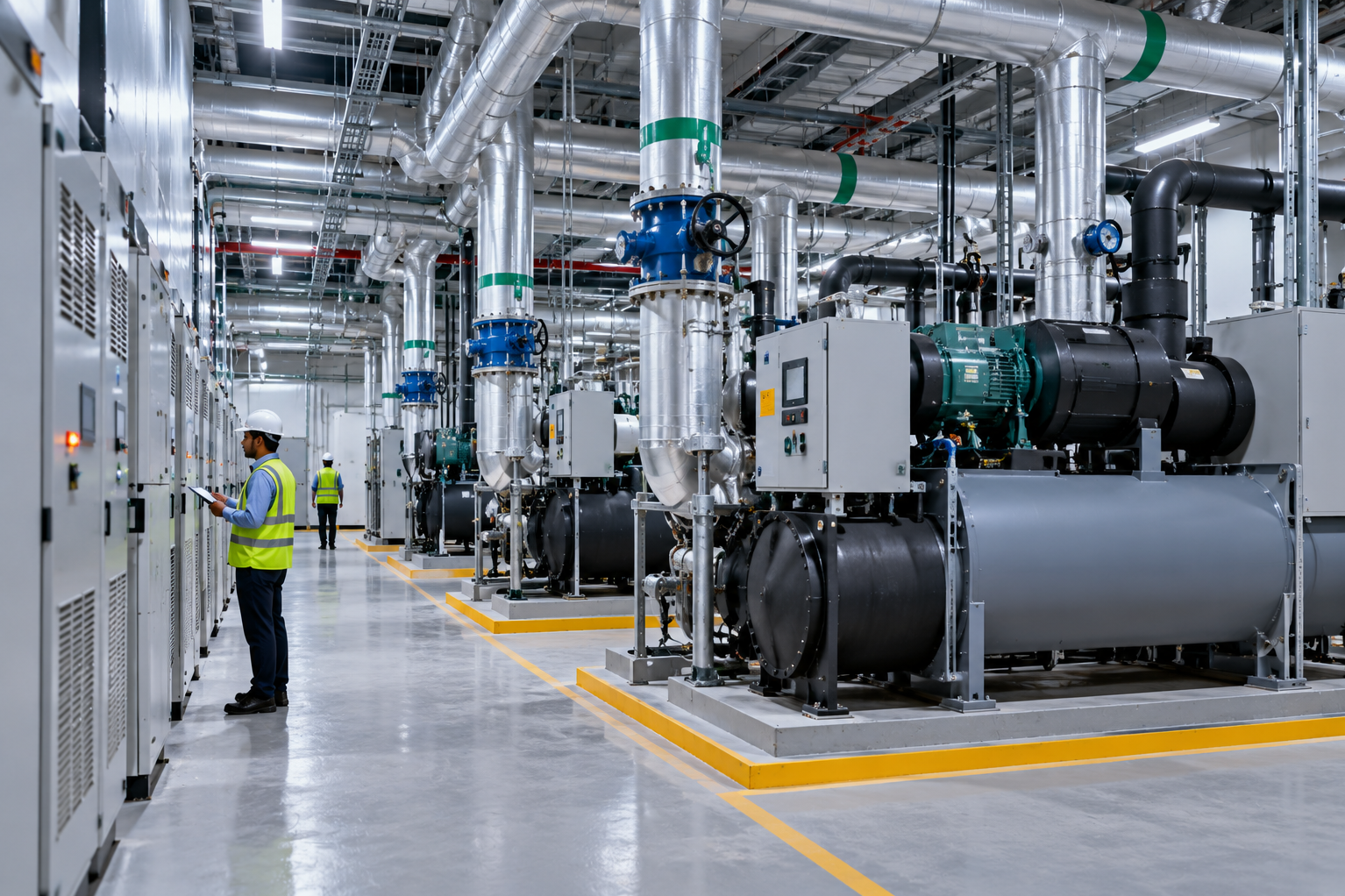
Some buildings can tolerate temporary HVAC disruption with limited consequences. Critical facilities cannot.
Data environments, healthcare areas, laboratories, pharmaceutical spaces, process facilities, specialised storage rooms, control centres, and other sensitive applications may depend on tightly maintained environmental conditions. In these settings, HVAC Systems for Critical Applications need to be designed around failure scenarios as carefully as normal operating conditions.
Organizations planning technically demanding facilities in Bangalore should therefore evaluate engineering consultants on their approach to risk, redundancy, controls, commissioning, and maintainability.
Define What Critical Means
The word critical should be translated into measurable requirements.
Project teams need to establish what environmental conditions must be maintained, how long an interruption can be tolerated, which equipment is essential, and what operational consequences follow a failure.
This can include requirements related to:
- Temperature
- Relative humidity
- Air cleanliness
- Room pressure
- Ventilation
- Equipment heat removal
- Continuous operation
- Process stability
Without defined performance criteria, redundancy can become either insufficient or unnecessarily expensive.
Identify Single Points of Failure
A critical system should be examined component by component.
Engineers can assess what happens if a fan fails, a pump stops, a chiller trips, electrical power is interrupted, a control sensor becomes unreliable, a filter becomes blocked, or communication with the building-management system is lost.
This process helps identify single points of failure.
The resulting design may use standby equipment, multiple distribution paths, emergency power, independent controls, spare capacity, or other strategies depending on the level of risk.
Redundancy Needs a Clear Purpose
More equipment does not automatically create a more reliable facility.
Redundant equipment that shares the same vulnerable electrical supply, piping route, control panel, or physical location can still be affected by a common failure.
The engineering strategy should therefore consider system architecture rather than equipment count alone.
Maintenance Is Part of Reliability
A critical facility must eventually service its equipment.
The project team should ask whether filters, fans, pumps, valves, controls, and major plant can be maintained while essential operations continue.
Isolation valves, bypass arrangements, equipment access, sectionalisation, and replacement routes can significantly influence operational resilience.
Maintenance planning belongs in design, not only in the facility-management manual.
Controls Need Appropriate Fail Safe Behaviour
Automation can improve reliability when it is designed carefully.
Critical HVAC controls may need alarms, equipment sequencing, automatic standby changeover, pressure monitoring, temperature monitoring, trend logging, and integration with facility management systems.
Engineers should also define how the system responds when a sensor, controller, communication link, or primary equipment item fails.
Operators need meaningful alarms rather than an overwhelming volume of notifications.
Commissioning Should Test Failure Scenarios
Normal operation is only part of critical-system commissioning.
Where appropriate, commissioning plans can include simulated equipment failures, standby changeover, alarm verification, control-sequence testing, power-loss response, and recovery behaviour.
Testing provides evidence that the installed system behaves according to the intended design.
Consultant Selection Should Examine the Complete Engineering Process
When appointing engineering support for a critical facility, clients should review how the consultant establishes design criteria, performs calculations, assesses risks, develops redundancy, coordinates electrical requirements, documents controls, supports construction, and plans commissioning.
Arete Consulting Engineers provides HVAC, refrigeration, MEP, and building engineering consultancy for technically complex projects in Bangalore and across relevant project environments in Karnataka.
Reliable HVAC Systems for Critical Applications come from understanding consequences, not simply increasing equipment capacity. A risk-based engineering approach connects environmental requirements, failure analysis, redundancy, maintainability, controls, emergency power, and commissioning so that the facility is better prepared for both routine operation and abnormal conditions.
Keywords