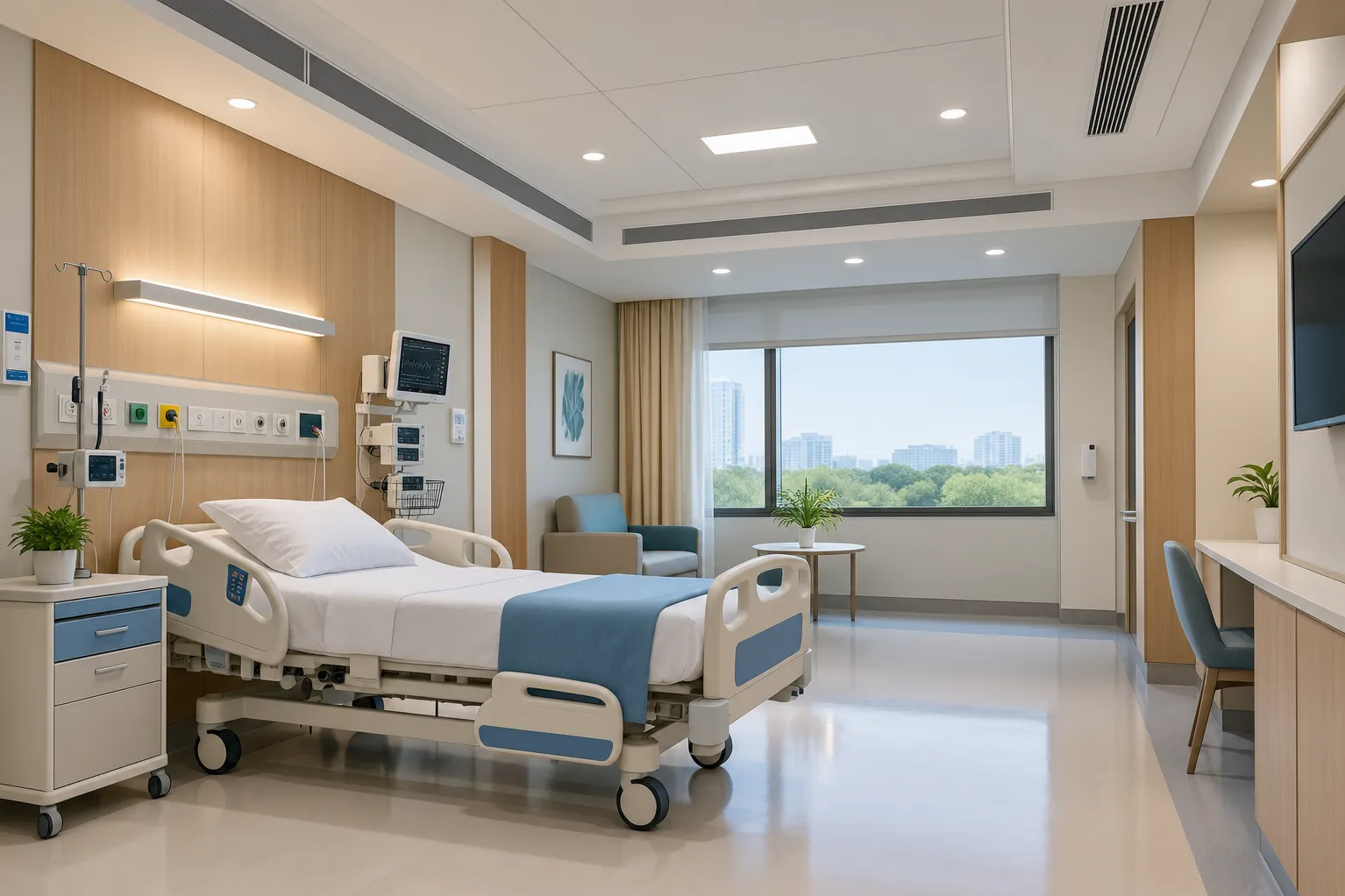
Healthcare buildings have to balance patient comfort, clinical requirements, indoor air quality, operational continuity, energy use, and maintainability. As facilities expand and medical technology changes, the HVAC infrastructure also needs to remain practical to operate.
Well-planned HVAC Systems in Healthcare Facilities address these priorities from the design stage rather than attempting to resolve them after construction.
Hospitals, speciality clinics, diagnostic centres, and healthcare developers in Bangalore can use several readiness indicators when deciding whether a new facility, expansion, or HVAC upgrade requires specialist engineering support.
Clinical Spaces Have Clearly Different Needs
The first indicator is the presence of spaces with different environmental requirements.
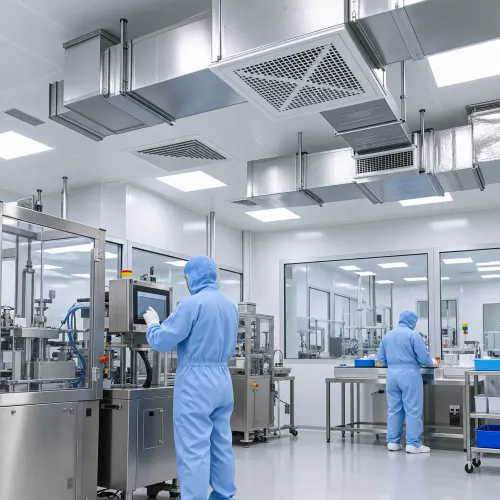
Patient wards, operating areas, isolation spaces, laboratories, imaging departments, pharmacies, sterile areas, and public zones should not automatically share the same HVAC strategy.
When a project contains several such functions, detailed zoning becomes essential.
Existing Systems Struggle With Environmental Stability
Recurring temperature complaints, humidity problems, pressure instability, excessive noise, uneven airflow, and frequent equipment alarms can indicate that the system no longer matches current building use.
An engineering assessment can help distinguish between maintenance problems, control issues, distribution deficiencies, equipment limitations, and changes in load.
Replacing equipment without identifying the root cause may simply reproduce the problem.
The Facility Is Expanding
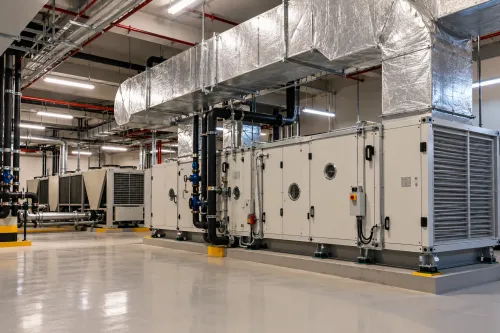
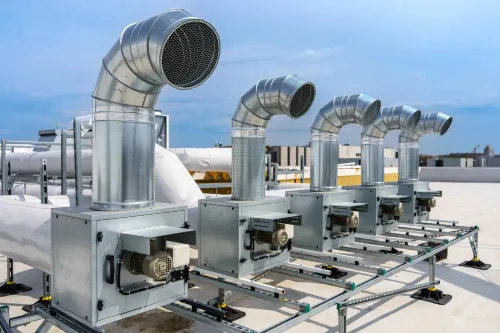
Hospital expansions can place additional demand on existing chillers, air-handling equipment, electrical infrastructure, pumps, ducts, ventilation systems, and controls.
Before connecting new areas to existing systems, available capacity should be assessed.
Expansion planning should also consider how construction and commissioning activities may affect occupied clinical areas.
Energy Consumption Is Becoming Difficult to Manage
Healthcare facilities often operate continuously, making HVAC a significant component of building energy consumption.
High energy use may result from several factors, including inefficient equipment, excessive simultaneous operation, unsuitable schedules, control problems, poor part-load performance, deteriorated components, or changed occupancy patterns.
Trend data and operating information can help engineers identify where investigation should begin.
Facility Teams Need Better System Visibility
When operators have limited information about equipment status and environmental conditions, faults can be harder to identify.
A suitable building automation strategy may provide centralised monitoring, alarms, schedules, trend information, and selected environmental readings.
Automation upgrades should be based on operational needs rather than the number of available software features.
Maintenance Has Become Disruptive
Difficult equipment access is a common lifecycle problem.
If filters, valves, coils, sensors, dampers, and other components cannot be reached without disturbing clinical operations, future refurbishment should address maintainability as a design requirement.
Plant layouts and service routes should provide appropriate working space wherever practical.
New Clinical Functions Are Being Introduced
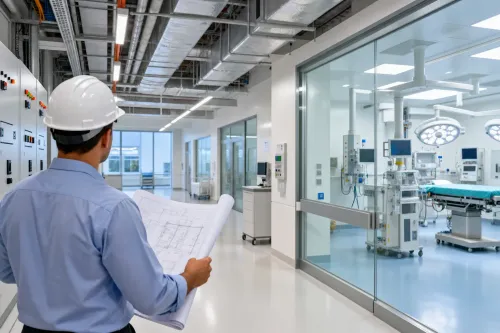
Adding a new operating area, laboratory, isolation facility, diagnostic department, or other specialist function can change HVAC requirements substantially.
The existing system should not be assumed suitable simply because cooling is available.
Arete Consulting Engineers supports healthcare and complex building projects through HVAC, MEP, refrigeration, automation, and building-services engineering. For projects in Bangalore and across Karnataka, multidisciplinary coordination can help determine how proposed HVAC changes interact with electrical capacity, plumbing, fire services, architecture, controls, and ongoing facility operations.
Healthcare HVAC should ultimately be evaluated as long-term infrastructure rather than a collection of cooling units. When clinical functions change, buildings expand, energy use rises, environmental control becomes unstable, or maintenance grows increasingly difficult, specialist engineering assessment can provide the technical basis for the next stage of the project.
A well-planned system supports not only today's clinical requirements but also more manageable operation, maintenance, monitoring, and future development.
Keywords