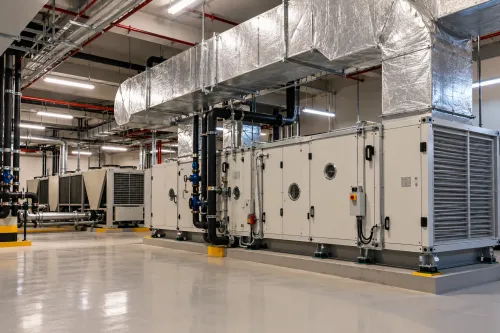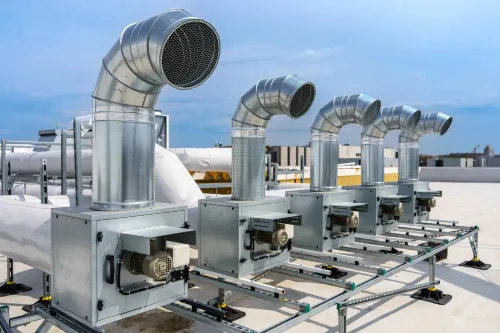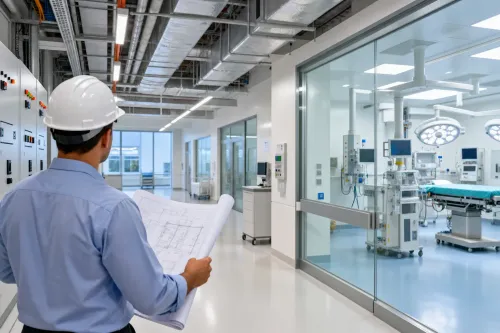
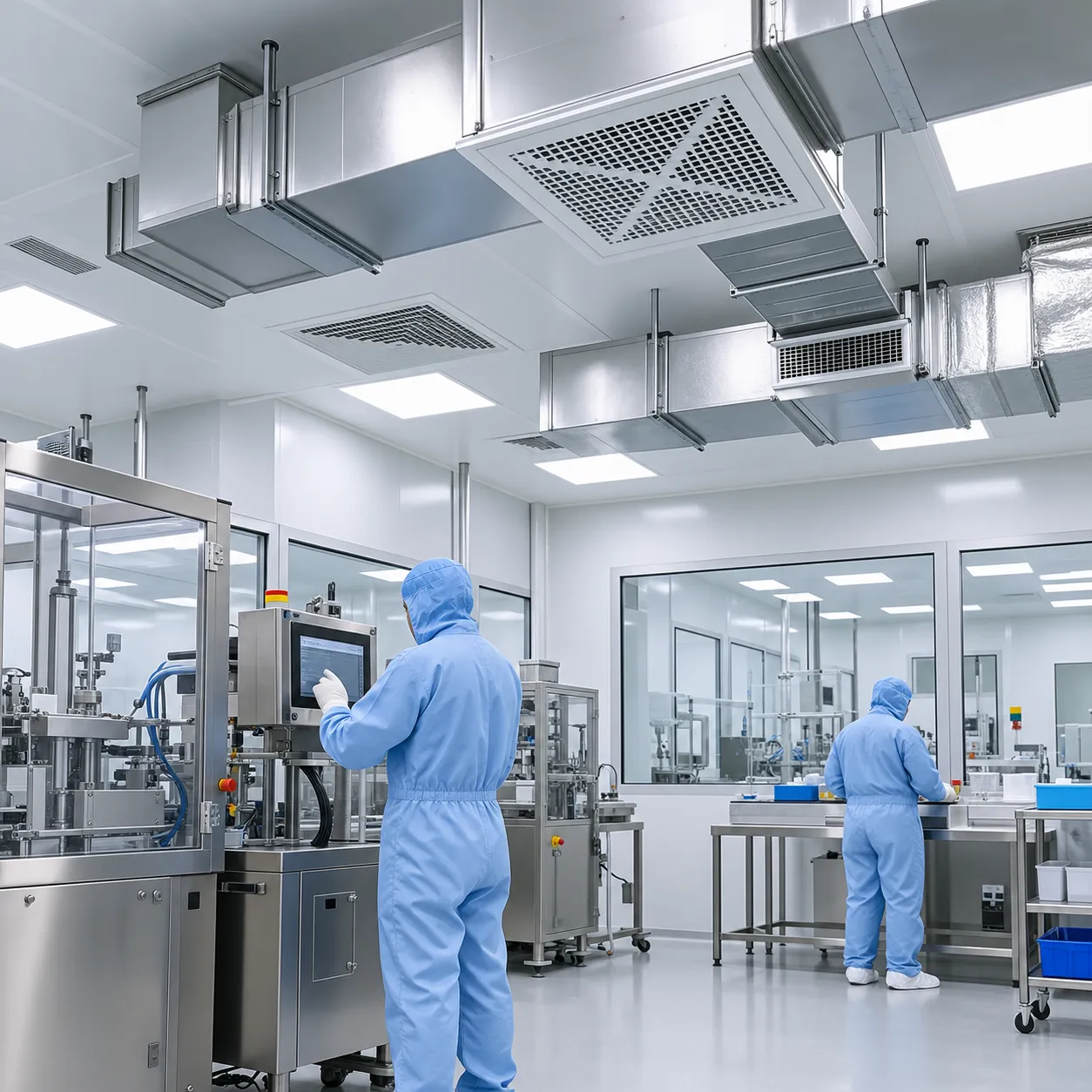
Cleanrooms are controlled environments where airborne particles and environmental conditions must be managed according to the process taking place inside the space. They are commonly associated with pharmaceutical manufacturing, laboratories, electronics, biotechnology, healthcare applications, and other contamination-sensitive operations.
Because of these requirements, Clean Room HVAC Systems perform a much more specialised role than conventional comfort air conditioning.
For cleanroom projects in Bangalore and across Karnataka, the HVAC design needs to begin with process requirements, cleanliness classification, room relationships, and applicable standards.
Cleanliness Classification Drives Design Decisions
Not every cleanroom requires the same level of environmental control.
Before developing the HVAC concept, engineers need information about the intended cleanliness classification, processes, products, occupancy, equipment, gowning procedures, operating schedule, and contamination risks.
These requirements influence air quantity, filtration, pressure relationships, system configuration, and control philosophy.
Designing without clearly defined process criteria can lead to unnecessary cost or inadequate performance.
Airflow Patterns Matter
Cleanroom performance depends partly on how conditioned and filtered air moves through the space.
Supply-air locations, return-air positions, room geometry, equipment placement, and internal obstructions can affect airflow behaviour.
Some applications may require unidirectional airflow, while others can use mixed airflow patterns based on classification and process needs.
The engineering objective is to support the required environmental conditions while limiting contamination transfer.
Pressure Differentials Create Controlled Boundaries
Pressure relationships between rooms are a critical part of cleanroom planning.
A positive-pressure room can help limit the entry of contaminants from adjacent areas. Certain containment applications may require negative pressure to help prevent substances from migrating outward.
This creates a pressure cascade between connected spaces.
Door opening, air leakage, exhaust systems, and changes in supply airflow can affect these relationships, which is why pressure control must be considered as part of the complete HVAC system.
Filtration Needs More Than Filter Selection
High-efficiency filtration is closely associated with cleanrooms, but installing suitable filters is only one part of the engineering task.
Engineers also need to consider airflow resistance, fan capacity, filter loading, replacement access, housing integrity, testing provisions, and how filtration affects system pressure.
Maintenance teams should be able to service filters without creating unnecessary contamination risks.
Temperature and Humidity May Be Process Critical
Cleanroom environmental conditions are not always selected purely for occupant comfort.
Products, equipment, materials, and manufacturing processes can have specific temperature and relative humidity requirements. Excessive humidity can affect some materials and processes, while very low humidity can introduce different operational concerns.
Accurate control therefore requires understanding the process tolerance before equipment is selected.
Validation Starts With Good Engineering
A cleanroom ultimately needs to demonstrate that it performs as intended.
Design documentation should clearly establish parameters such as airflow quantities, filtration strategy, pressure relationships, temperature, humidity, and control sequences.
Instrumentation and testing provisions should also be planned from the beginning.
For technically controlled facilities in Bangalore, Arete Consulting Engineers can integrate cleanroom HVAC requirements with electrical, plumbing, utility, and building-service coordination.
Effective Clean Room HVAC Systems are created through disciplined engineering rather than simply adding high-efficiency filters to a conventional air-conditioning system. Classification, airflow, pressure, filtration, environmental control, maintainability, and validation all need to work together to support the required controlled environment.
Keywords