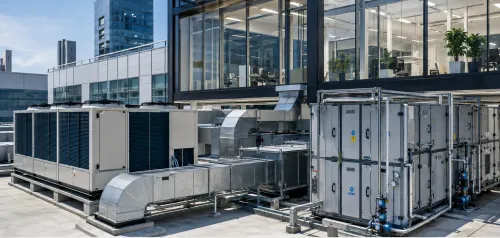

Selecting equipment is only one part of delivering a successful HVAC system. Before equipment can be specified, engineers need to understand building use, calculate loads, define ventilation, establish zoning, plan distribution, coordinate services, develop controls, and create documentation that contractors can implement.
This makes the selection of HVAC Design and Engineering Services an important early decision for complex building projects.
Architects, builders, developers, industrial companies, hospitals, and project consultants in Bangalore should evaluate engineering partners based on technical capability and project coordination rather than consultancy cost alone.
Look for Strong Requirement Definition
Good engineering begins with questions.
The consultant should seek information about occupancy, operating schedules, process loads, indoor design conditions, fresh-air needs, critical spaces, future expansion, equipment preferences, maintenance strategy, and energy objectives.
A proposal developed without understanding these factors may rely too heavily on generic assumptions.
Review the Design Process
A professional HVAC design process generally progresses from initial requirements through calculations, system selection, layouts, specifications, coordination, and construction documentation.
Project teams should understand what deliverables will be produced at each stage.
Depending on the project, these may include:
- Heat-load calculations
- Ventilation calculations
- Equipment schedules
- Duct layouts
- Piping layouts
- Schematics
- Control concepts
- Technical specifications
- Equipment selection criteria
- Coordinated MEP drawings
Clear deliverables reduce ambiguity during tendering and execution.
Evaluate Multidisciplinary Capability
HVAC systems interact continuously with other building services.
Cooling equipment requires electrical power. Condensate needs drainage. Ductwork shares ceiling space with lighting, plumbing, fire services, and cable containment. Building automation needs sensors and communication infrastructure.
A consultant that understands these interfaces can identify potential conflicts earlier.
Ask How Energy Efficiency Is Addressed
Energy-efficient engineering is not achieved by selecting one high-efficiency product.
It begins with load reduction, accurate sizing, appropriate system architecture, efficient distribution, zoning, controls, and part-load performance.
Ask how proposed design decisions will influence both capital cost and long-term energy consumption.
Examine Maintainability
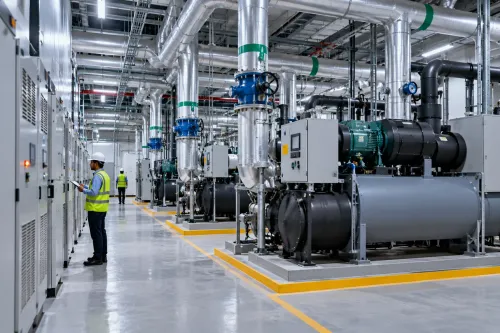
Plant rooms and service areas should provide practical access to equipment.
Filters, valves, coils, dampers, sensors, pumps, panels, and other components need inspection and maintenance throughout the building's life.
A design that ignores service access may create unnecessary operational difficulties later.
Review Experience With Similar Applications
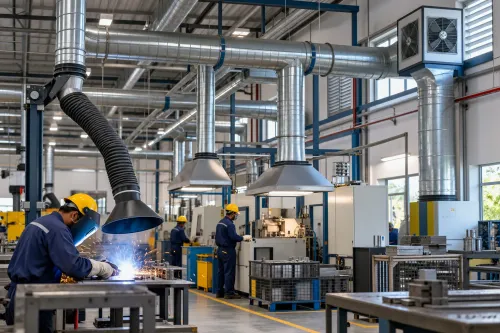
An industrial plant has different requirements from a hospital, shopping mall, pharmaceutical facility, or cargo centre.
Relevant sector experience can help engineers identify application-specific requirements earlier and communicate effectively with architects, contractors, process consultants, and client teams.
Arete Consulting Engineers provides engineering consultancy across HVAC, MEP, refrigeration, building automation, and wider building services. For complex projects, this multidisciplinary scope can help maintain coordination as design decisions develop.
Check Readiness Before Appointment
A project is usually ready for detailed HVAC engineering when the basic architectural concept, building use, approximate areas, operational requirements, and major process information are available.
Earlier engagement can still be valuable for concept planning, plant-space allocation, shafts, service routes, and preliminary utility requirements.
For Bangalore projects, early coordination is particularly useful where valuable floor area and ceiling space need to be managed carefully.
Choosing an HVAC engineering consultant should ultimately be based on the quality of analysis, coordination, documentation, and lifecycle thinking the team brings to the project. Those factors have a lasting impact long after the initial design stage is complete.
Keywords