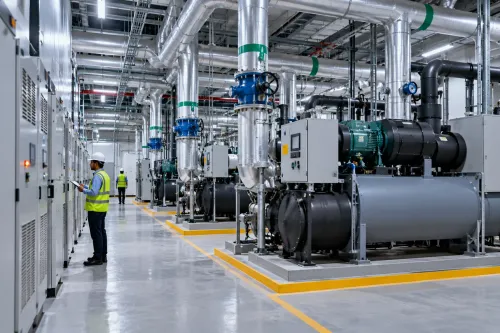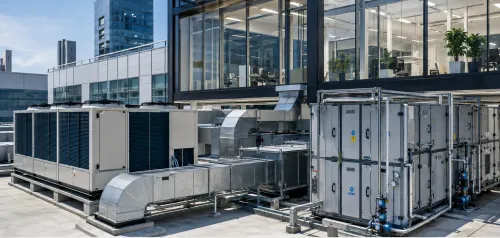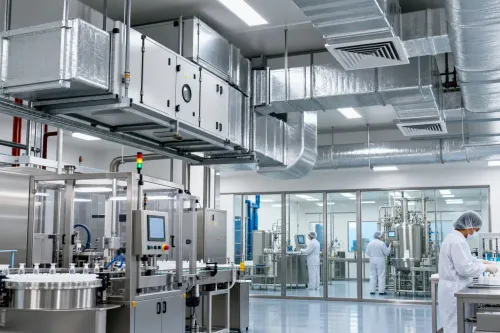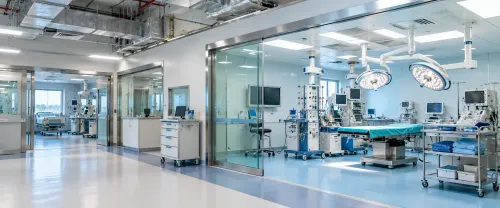
Some buildings can tolerate minor variations in temperature, humidity, or airflow without serious operational consequences. Critical facilities may not have that flexibility.
HVAC Systems for Critical Applications may support laboratories, healthcare spaces, pharmaceutical operations, controlled manufacturing, data-sensitive environments, research facilities, and specialised industrial processes. In such settings, an HVAC problem can affect far more than occupant comfort.
For engineering teams and project owners in Bangalore, avoiding common design mistakes can improve reliability and reduce difficult modifications during commissioning.
Treating Critical HVAC Like Comfort Cooling
One of the biggest mistakes is applying conventional office HVAC assumptions to a process-sensitive environment.
Critical applications may require defined temperature ranges, humidity control, filtration, pressure relationships, airflow patterns, redundancy, alarms, and continuous monitoring.
These requirements need to be identified before system selection.
Using Incomplete Load Information
Cooling-load calculations are only as reliable as their inputs.
Process equipment, laboratory devices, lighting, occupants, fresh air, building envelope loads, operating schedules, and future equipment can all influence the actual requirement.
When process data is unavailable during early design, assumptions should be clearly documented and reviewed as information becomes available.
Ignoring Part-Load Operation
Equipment may be selected for peak conditions, but facilities spend substantial time operating below peak load.
Poor part-load performance can affect efficiency and environmental stability.
System selection should therefore consider turndown capability, staging, variable-speed operation, control sequences, and the minimum load expected in each zone.
Overlooking Pressure Relationships
In controlled spaces, airflow between rooms can be as important as room temperature.
Incorrect supply, return, exhaust, or leakage assumptions may prevent the intended pressure relationship from being maintained.
Door operation and changes in system mode should also be considered during the engineering process.
Designing Without Maintenance Access
Critical equipment still requires filters to be changed, coils to be cleaned, sensors to be calibrated, and mechanical components to be serviced.
When equipment is squeezed into inaccessible ceiling voids or plant rooms, routine maintenance becomes more difficult and disruptive.
Access routes and service clearances should therefore be reviewed during design coordination.
Depending Too Heavily on Automation
Advanced controls are valuable, but they cannot correct fundamental mechanical design problems.
A sophisticated building management system cannot compensate for inadequate airflow, poorly sized ductwork, unsuitable equipment, or incorrect pressure relationships.
Mechanical design and controls should be developed together.
Leaving Commissioning Until the End
Testing and commissioning should not be treated as a final administrative activity.
Critical HVAC systems may require airflow balancing, pressure verification, temperature and humidity testing, control-sequence checks, alarm verification, and performance assessment under different operating conditions.
Designing with commissioning in mind makes these activities more practical.
Missing Cross-Discipline Coordination
Critical applications frequently involve specialist process systems alongside conventional building services.
Arete Consulting Engineers works across HVAC, refrigeration, MEP, building automation, and building-services engineering. This integrated approach can help project teams identify interfaces early, particularly where mechanical performance depends on electrical supply, controls, architecture, process layouts, and utility systems.
Bangalore's healthcare, pharmaceutical, research, technology, and industrial sectors include facilities where environmental stability is integral to operations. In these projects, the best way to reduce HVAC risk is to establish performance requirements early and maintain them through design, coordination, installation, testing, and operation.
Critical HVAC engineering succeeds when every major decision can be traced back to an actual operational requirement.
Keywords