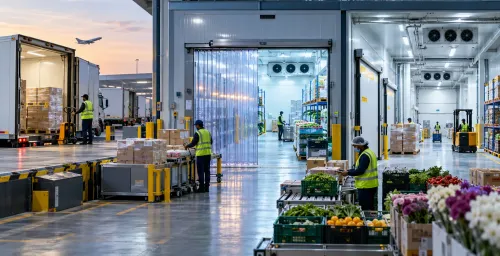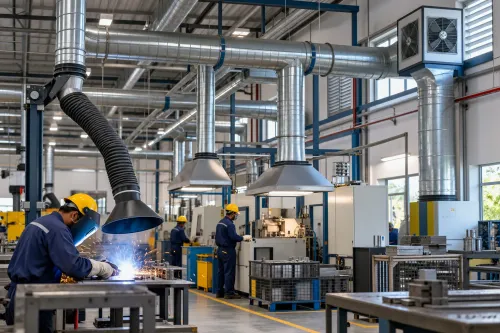
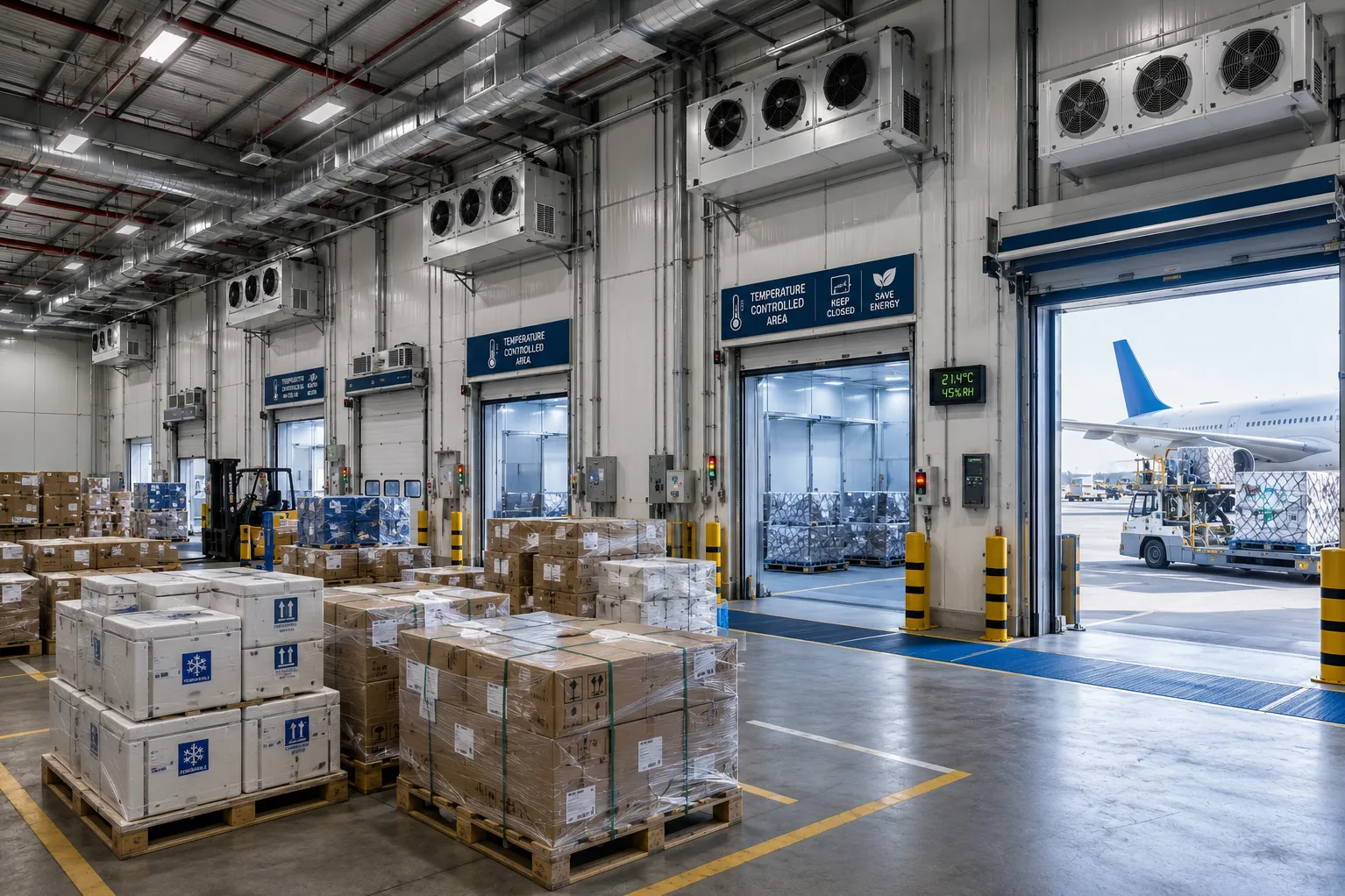
Cargo facilities are highly dynamic environments. Doors open frequently, goods move continuously, occupancy changes throughout the day, and storage zones may have completely different environmental requirements.
These characteristics make HVAC Systems for Cargo Centres an engineering challenge that extends beyond ordinary warehouse cooling.
Cargo and logistics developments serving Bangalore and Karnataka may handle pharmaceuticals, electronics, food products, temperature-sensitive materials, general freight, and specialised shipments. HVAC requirements should therefore be based on what is being handled, how long it remains in the facility, and the conditions that need to be maintained.
Cargo Movement Changes the Cooling Load
A cargo centre rarely behaves like a sealed commercial building.
Loading bays and access doors may remain open during operations. Vehicles, handling equipment, lighting, personnel, and incoming goods can all contribute to the thermal load.
Outdoor air entering through frequently opened doors can also introduce heat and moisture.
Design calculations should therefore reflect realistic operating conditions rather than relying only on floor area.
Zoning Helps Match Conditions to Cargo Needs
Not every part of a cargo facility requires the same indoor environment.
A project may include:
- General storage
- Temperature-controlled storage
- Inspection areas
- Packing zones
- Cold rooms
- Loading and unloading areas
- Administrative offices
- Equipment rooms
Separating these spaces into appropriate environmental zones can improve control and prevent unnecessary energy use.
Air Distribution Needs Practical Planning
Large storage areas often have high ceilings, racks, changing cargo arrangements, and moving equipment. These factors can affect how conditioned air circulates.
Poor air distribution may create hot spots even when the cooling equipment has sufficient nominal capacity.
Engineers therefore examine supply-air locations, return-air paths, air velocities, rack layouts, ceiling heights, and operational movement when developing the distribution strategy.
Infiltration Can Become a Major Load
Air entering through loading doors can have a substantial effect on temperature and humidity.
Possible engineering measures depend on the facility configuration and may include vestibules, controlled openings, air curtains where suitable, pressure management, door-management strategies, and separation between conditioned and non-conditioned areas.
Reducing uncontrolled infiltration can improve both environmental stability and energy performance.
Monitoring Supports Temperature-Sensitive Operations
For sensitive cargo, simply installing cooling equipment is not enough. Operators need visibility into actual environmental conditions.
Sensors may be used to monitor temperature and humidity at strategically selected locations. Building automation can provide equipment status, alarms, operating trends, and other information useful to facility teams.
Sensor placement matters because readings taken in one convenient location may not represent conditions throughout a large storage area.
Refrigeration and HVAC Need Coordination
Some cargo centres contain both comfort-conditioning systems and dedicated refrigeration equipment.
These systems can interact with one another. Heat rejection, drainage, electrical loads, controls, plant-room planning, ventilation, and maintenance access should therefore be coordinated during design.
Arete Consulting Engineers provides HVAC, refrigeration, MEP, and building automation engineering, which allows these interfaces to be addressed as connected building-service requirements rather than isolated packages.
Design Should Reflect Future Operations
Cargo centres can change over time as shipment volumes, rack layouts, operating hours, and product categories evolve.
Design teams should discuss foreseeable operational changes early enough to evaluate whether zoning, controls, distribution arrangements, and equipment planning can accommodate reasonable future requirements.
For logistics projects around Bangalore, where both regional distribution and temperature-sensitive supply chains continue to require specialised facilities, thoughtful HVAC engineering can directly support dependable cargo handling.
The objective is not simply to cool a large building. It is to maintain appropriate conditions across different operational zones despite changing loads, frequent movement, infiltration, and demanding logistics schedules.
Keywords