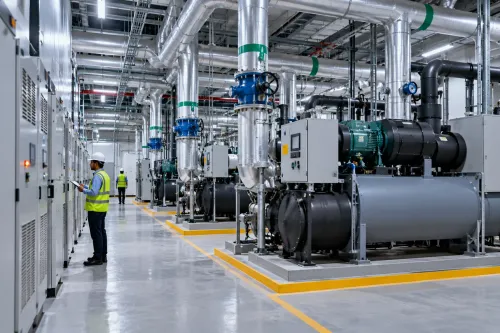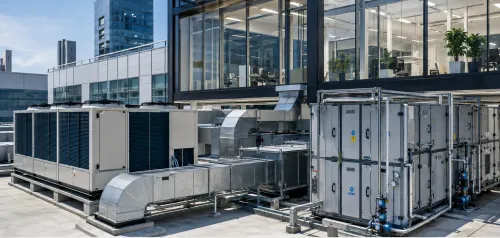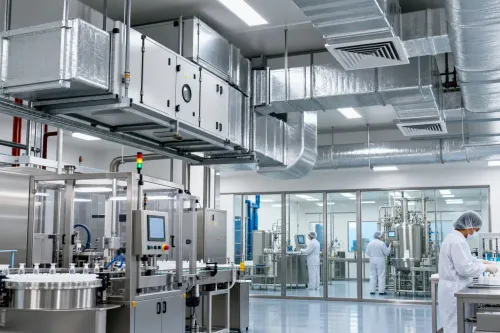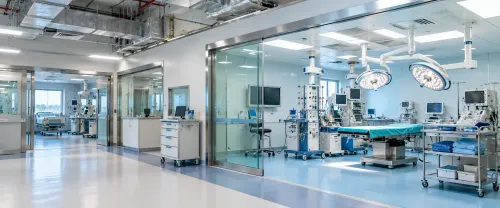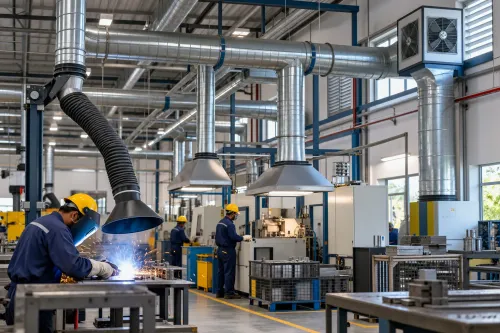
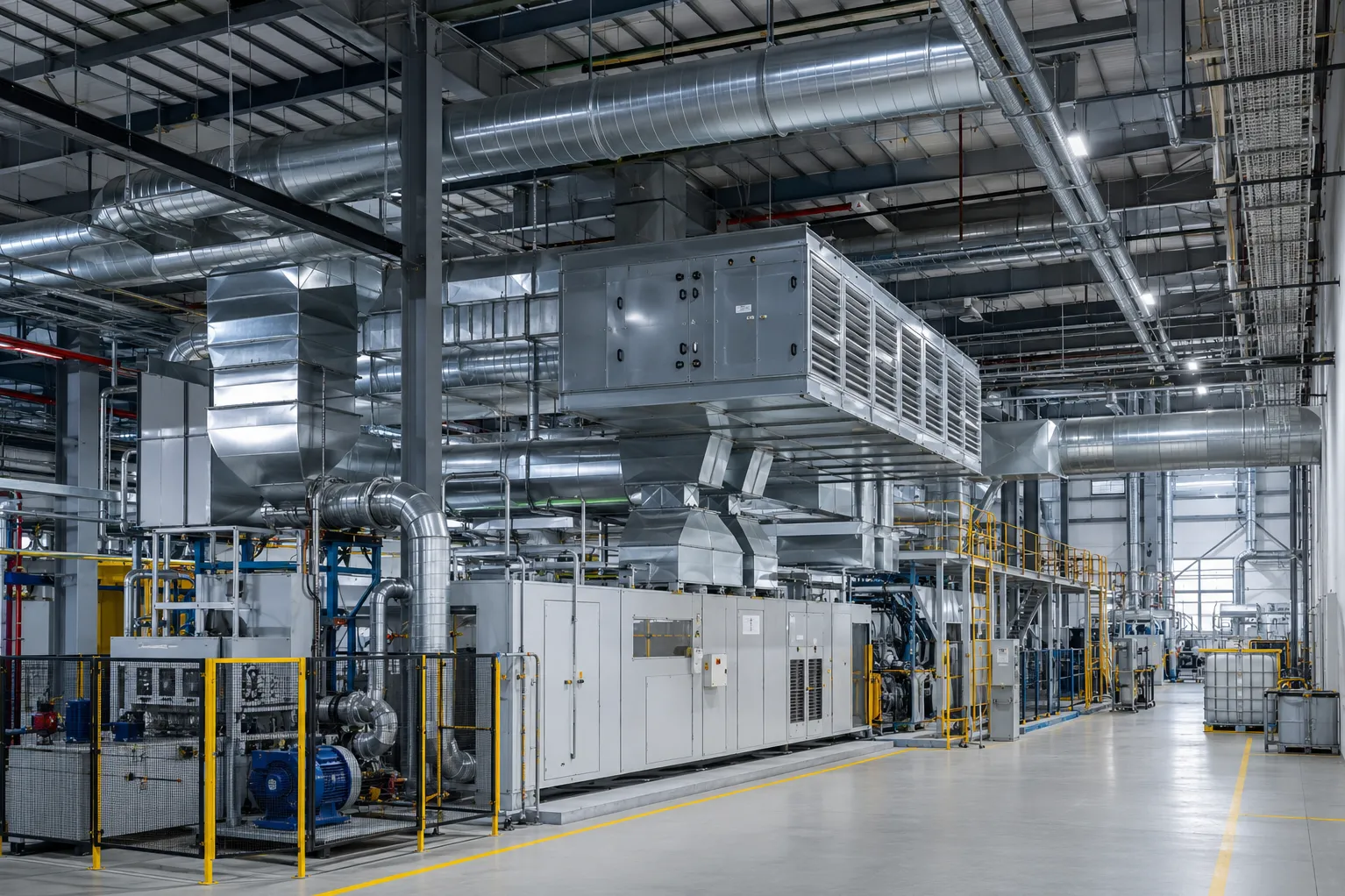
Industrial facilities place very different demands on heating, ventilation, and air-conditioning compared with ordinary commercial buildings. Manufacturing processes, equipment heat loads, airborne contaminants, occupancy patterns, production schedules, and indoor environmental requirements all influence how an HVAC system should be planned.
Well-designed Industrial HVAC Systems do more than maintain a comfortable temperature. They help control heat, humidity, ventilation, air quality, pressure relationships, and operating conditions required by people, equipment, and processes.
In Bangalore and across Karnataka, industrial development includes manufacturing units, engineering facilities, warehouses, pharmaceutical plants, technology campuses, and specialised production environments. Each facility needs an HVAC approach based on its actual operational requirements rather than a standard building-services template.
Industrial HVAC Begins With Load Assessment
HVAC design starts with understanding where heat enters or develops within a facility. Outdoor temperature is only one part of the calculation.
Engineers may need to consider:
- Heat generated by machinery
- Lighting and electrical equipment
- Number of occupants
- Fresh-air requirements
- Building envelope characteristics
- Production processes
- Operating hours
- Doors frequently opened during material movement
- Required indoor temperature and humidity
- Local climatic conditions
Incorrect load assumptions can result in oversized or undersized equipment. Both situations may affect energy consumption, temperature control, humidity management, and equipment life.
Ventilation Has a Major Industrial Role
Many industrial environments generate heat, fumes, dust, vapours, odours, or other airborne contaminants. Effective ventilation helps remove these pollutants while supplying appropriate replacement air.
The ventilation strategy may include general ventilation, local exhaust systems, fresh-air supply, air filtration, and pressure management.
Air distribution is equally important. Simply installing high-capacity fans does not guarantee effective ventilation if air does not reach occupied and process areas correctly.
Temperature and Humidity Need Process-Based Control
In some facilities, indoor conditions influence more than employee comfort.
Manufacturing materials, electronic components, packaging operations, pharmaceuticals, food products, and sensitive machinery may react to variations in temperature or relative humidity.
This means industrial HVAC design may require tighter environmental control in selected areas while using less demanding conditions elsewhere. Creating zones based on actual requirements can help avoid unnecessary conditioning of the entire facility to the strictest specification.
Air Filtration Depends on the Application
Different industrial applications require different filtration levels.
A general production floor may have very different filtration requirements from a pharmaceutical processing area, laboratory, electronics facility, or clean manufacturing environment.
Engineers consider particle control requirements, outside-air quality, process-generated contaminants, pressure drop, maintenance accessibility, and filter replacement needs when selecting filtration arrangements.
Energy Efficiency Starts With Engineering Decisions
Energy performance is influenced long before equipment begins operating.
Efficient design may involve appropriate equipment sizing, zoning, variable-speed operation, heat recovery where technically suitable, efficient motors, control sequences, duct optimisation, insulation, and building automation.
A system should also be evaluated at part-load conditions. Industrial facilities rarely operate at exactly the same load throughout every hour of the year.
Controls Help Systems Respond to Changing Loads
Sensors and control systems can help monitor parameters such as temperature, humidity, pressure, airflow, and equipment status.
When integrated appropriately, building automation can coordinate HVAC equipment based on actual operating conditions. This may reduce unnecessary equipment operation while helping facility teams identify abnormal conditions.
The value of automation depends heavily on the underlying engineering. Controls cannot compensate for poorly sized equipment, inadequate ductwork, or an unsuitable ventilation concept.
Maintenance Access Should Be Planned Early
A technically capable HVAC installation can still become difficult to operate when filters, coils, dampers, valves, sensors, and equipment are difficult to reach.
Maintenance access should therefore be considered during layout development rather than after installation.
For industrial projects in Bangalore, involving HVAC specialists during the planning stage can help coordinate mechanical requirements with architectural, structural, electrical, and process systems. Arete Consulting Engineers works across HVAC, MEP, refrigeration, automation, and building-services engineering, allowing these interconnected requirements to be considered within the wider project design.
Ultimately, effective industrial HVAC engineering is about matching environmental control to the way a facility actually works. Careful load analysis, ventilation planning, filtration, zoning, controls, and maintainability can create systems that support both operational reliability and long-term building performance.
Keywords