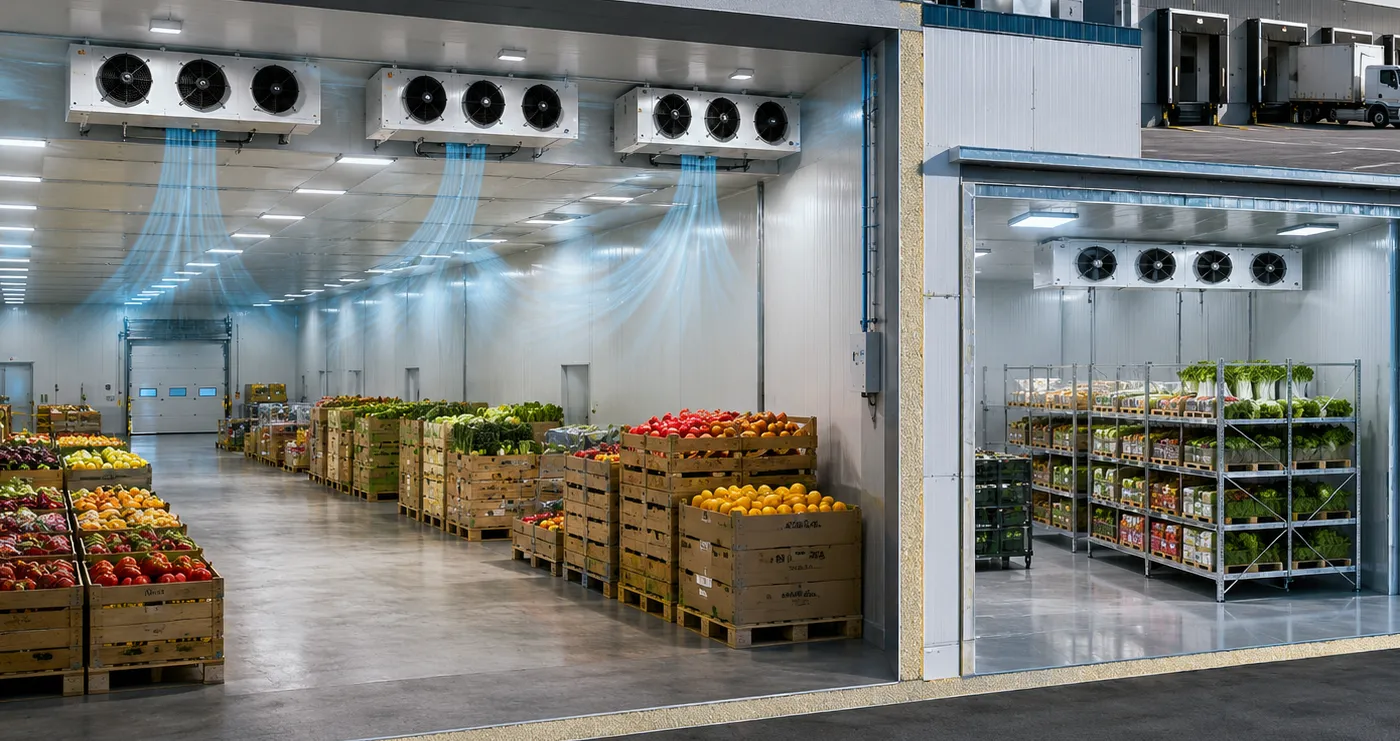
Perishable cargo requires carefully controlled environmental conditions from arrival through storage and dispatch. Fresh produce, dairy products, seafood, meat, flowers, pharmaceuticals, and other temperature-sensitive goods can deteriorate quickly when exposed to unsuitable temperatures or humidity levels.
Specialised HVAC Systems for Perishable Cargo Centres help maintain stable conditions across handling, inspection, temporary storage, and distribution areas. Their purpose is not limited to cooling the building. They support product quality, reduce spoilage, protect hygiene, and help cargo operators maintain an uninterrupted cold chain.
Why Perishable Cargo Needs Precise Environmental Control
Temperature-sensitive goods may remain inside a cargo facility for several hours before being transferred to refrigerated transport or long-term cold storage. During this period, even short temperature fluctuations can affect freshness, shelf life, and product safety.
A properly engineered HVAC system helps control:
- Indoor temperature
- Relative humidity
- Air cleanliness
- Fresh air supply
- Pressure relationships
- Condensation
- Odour movement
- Heat entering through loading areas
The required conditions depend on the type of cargo, handling duration, packaging method, and applicable hygiene requirements.
Each Product Category Has Different Needs
A single environmental setting may not be suitable for every perishable product.
For example:
- Fruits and vegetables require suitable humidity to reduce moisture loss.
- Flowers need controlled temperatures to preserve freshness.
- Dairy products require reliable low-temperature handling.
- Seafood and meat need strict hygiene and odour control.
- Pharmaceutical cargo may require validated temperature ranges.
- Frozen products need protection from temperature excursions.
Separate zoning allows the facility to maintain appropriate conditions for different product categories without affecting nearby cargo.
Important Areas Within a Perishable Cargo Centre
The HVAC design should reflect the complete movement of goods through the facility.
Critical areas may include:
- Receiving docks
- Inspection and quality-control rooms
- Temperature-controlled holding zones
- Cold rooms
- Packing and repacking sections
- Quarantine areas
- Dispatch bays
- Staff hygiene spaces
- Documentation offices
Transitions between these areas must be carefully planned to prevent warm air infiltration and condensation.
Preventing Temperature Loss at Loading Points
Loading and unloading areas are among the most challenging parts of a perishable cargo facility. Large doors may open repeatedly, allowing warm and humid outdoor air to enter temperature-controlled zones.
Engineering measures may include:
- Air curtains
- Dock shelters
- Rapid-closing doors
- Temperature-buffer zones
- Proper pressure control
- Strategically located supply air points
- Continuous environmental monitoring
These features help protect indoor conditions during frequent cargo movement.
Managing Humidity and Condensation
Humidity control is essential because excessive moisture can encourage microbial growth, damage packaging, and create slippery surfaces. Low humidity may also reduce the quality of products such as fruits, vegetables, and flowers.
A well-designed system balances temperature and humidity while preventing condensation on ceilings, ducts, walls, and equipment. Insulation, vapour barriers, drainage planning, and air distribution must all be coordinated carefully.
Reliability and Monitoring Are Essential
Perishable cargo facilities cannot afford prolonged HVAC failure. System performance should be continuously monitored so facility teams can respond quickly to abnormal conditions.
Useful provisions include:
- Temperature and humidity sensors
- Automated alarms
- BMS integration
- Equipment redundancy
- Backup power coordination
- Maintenance access
- Historical performance records
These features improve operational control and support product-quality documentation.
Supporting Perishable Logistics in Bangalore
Bangalore serves as an important distribution point for food products, floriculture, pharmaceuticals, retail supply chains, and air cargo moving across Karnataka and other regions. Facilities handling perishable goods must account for local climate conditions, seasonal humidity, traffic-related delays, and varying cargo volumes.
Arete Consulting Engineers provides integrated engineering consultancy covering HVAC, electrical systems, public health engineering, fire protection, BMS, and sustainable building design. Coordinated engineering helps perishable cargo facilities maintain reliable environmental conditions while reducing operational conflicts.
HVAC Systems for Perishable Cargo Centres are essential for protecting temperature-sensitive goods throughout the handling process. Precise zoning, humidity management, reliable monitoring, and early multidisciplinary planning help reduce spoilage while supporting efficient cold-chain operations.
Keywords