Perishable cargo can lose quality when exposed to unsuitable temperatures, humidity levels, or prolonged transitions between controlled environments. This makes environmental engineering a significant consideration in facilities handling food products, flowers, pharmaceuticals, biological materials, and other temperature-sensitive goods.
Effective HVAC Systems for Perishable Cargo Centres need to support the entire cargo-handling process rather than focusing only on a cold storage room.
For logistics facilities serving Bangalore and wider Karnataka, the design should reflect cargo type, throughput, holding time, loading patterns, required temperature zones, and the surrounding refrigeration infrastructure.
Map the Cargo Journey First
Before calculating cooling loads, engineers should understand how goods move through the building.
A typical sequence might include receiving, inspection, temporary holding, sorting, storage, packing, staging, and dispatch.
Every transfer between zones creates the potential for temperature variation.
Mapping this journey helps identify where conditioned transition areas, rapid doors, air barriers, dedicated cooling, or revised operational procedures may be useful.
Separate Zones by Actual Requirements
Different products may require different storage conditions.
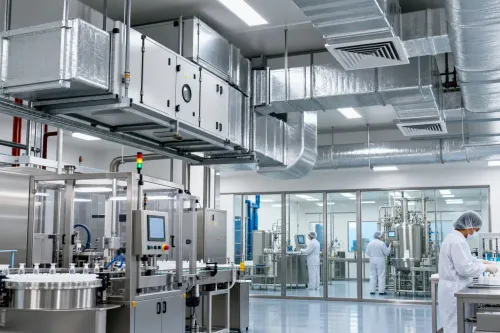
Instead of attempting to maintain one temperature throughout the entire building, facilities can be divided into zones based on cargo requirements and operating functions.
This approach may reduce unnecessary cooling while improving environmental control in sensitive areas.
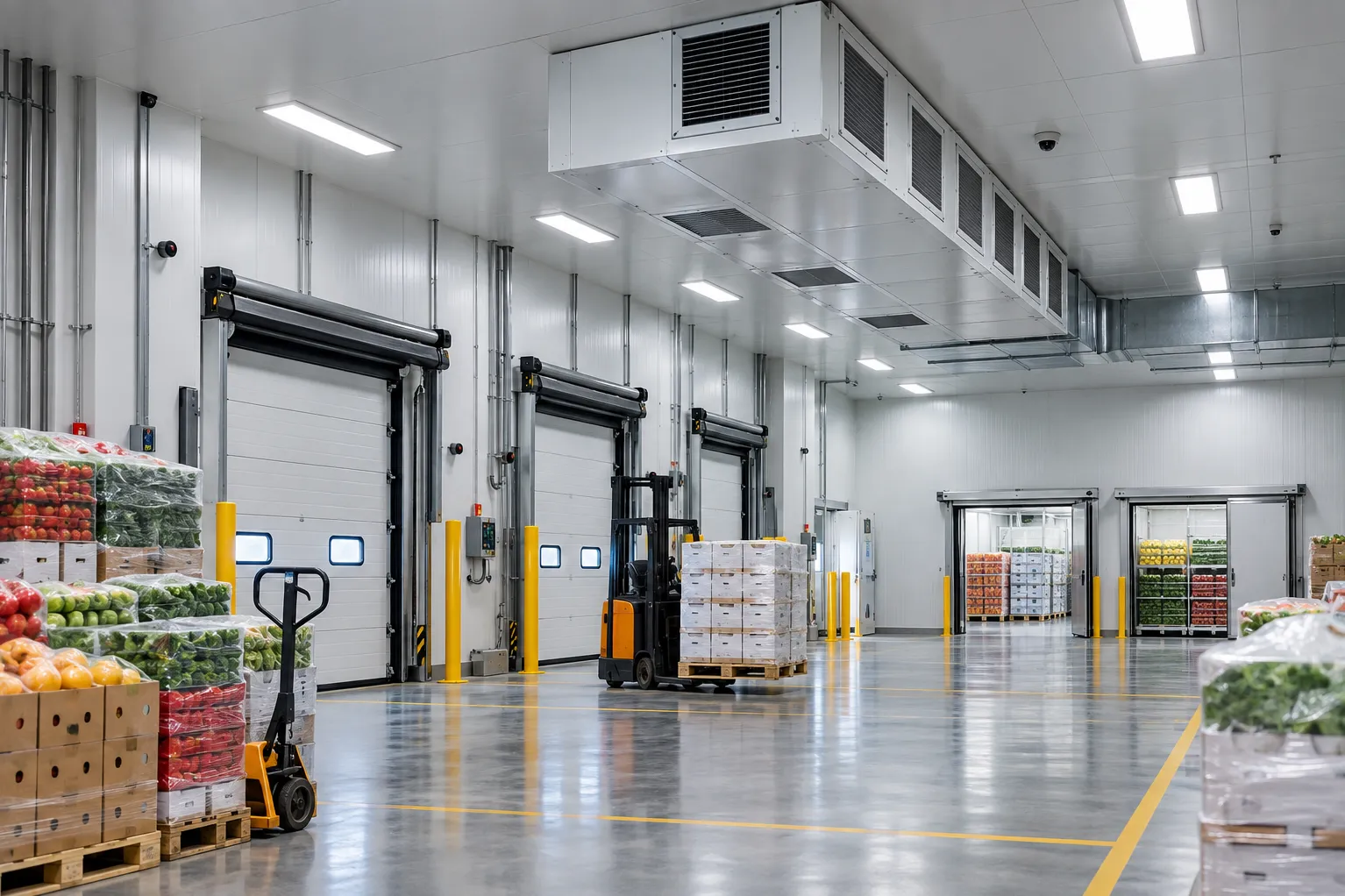
Control Infiltration at Loading Points
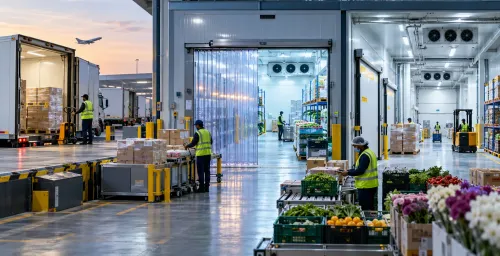
Loading areas are among the most challenging parts of a temperature-controlled facility.
Every door opening can allow warm, humid outdoor air into a conditioned zone. This increases cooling and dehumidification loads and can make environmental conditions less stable.
Door dimensions, opening frequency, vehicle movement, staging practices, pressure relationships, and physical separation should all be considered.
Evaluate Humidity Alongside Temperature
Temperature often receives most of the attention in cold-chain facilities, but humidity can also affect products, packaging, condensation, and building surfaces.
Engineers should evaluate latent loads created by outdoor air and cargo movement rather than focusing solely on sensible cooling.
Suitable coil selection, air treatment, controls, and door-management strategies can contribute to better humidity management.
Integrate Refrigeration With Building Services
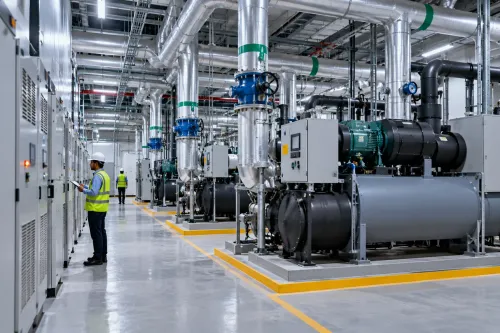
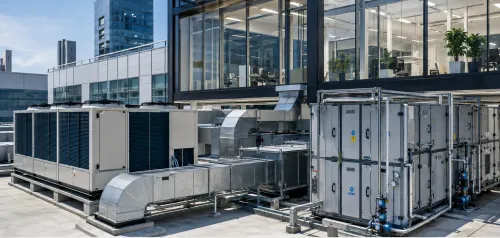
Perishable cargo facilities may use refrigeration systems for cold rooms while HVAC systems serve handling zones, offices, transition spaces, and other areas.
Both systems need coordinated electrical supply, drainage, heat rejection, controls, ventilation, equipment access, and maintenance planning.
Poor coordination can create conflicts that become difficult to solve after installation.
Install Meaningful Monitoring
Temperature-sensitive operations need reliable information.
Sensors should be placed where they represent actual storage and handling conditions rather than simply where installation is convenient.
Depending on the application, building automation can provide temperature trends, humidity readings, equipment status, alarms, and operational data.
Historical trends may also help facility teams identify recurring issues such as temperature increases during specific loading periods.
Consider Downtime Risk
For perishable goods, HVAC and refrigeration downtime can have direct commercial consequences.
Engineering teams should therefore assess system criticality, equipment redundancy where justified, alarm strategies, backup power requirements, and response procedures according to the facility's risk profile.
Arete Consulting Engineers brings together HVAC, refrigeration, MEP, and automation engineering for facilities where these systems need to operate as a coordinated whole.
For perishable cargo developments around Bangalore, early engineering involvement can help align storage requirements with architectural layouts, loading operations, refrigeration plant, electrical infrastructure, and controls.
Temperature control becomes more dependable when the building is designed around the complete cargo journey. The objective is to reduce environmental variation from receiving through dispatch while creating a system that remains practical to operate, monitor, and maintain.
Keywords