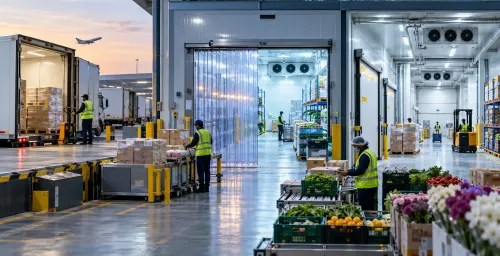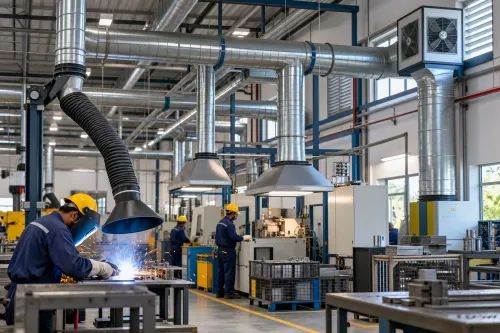
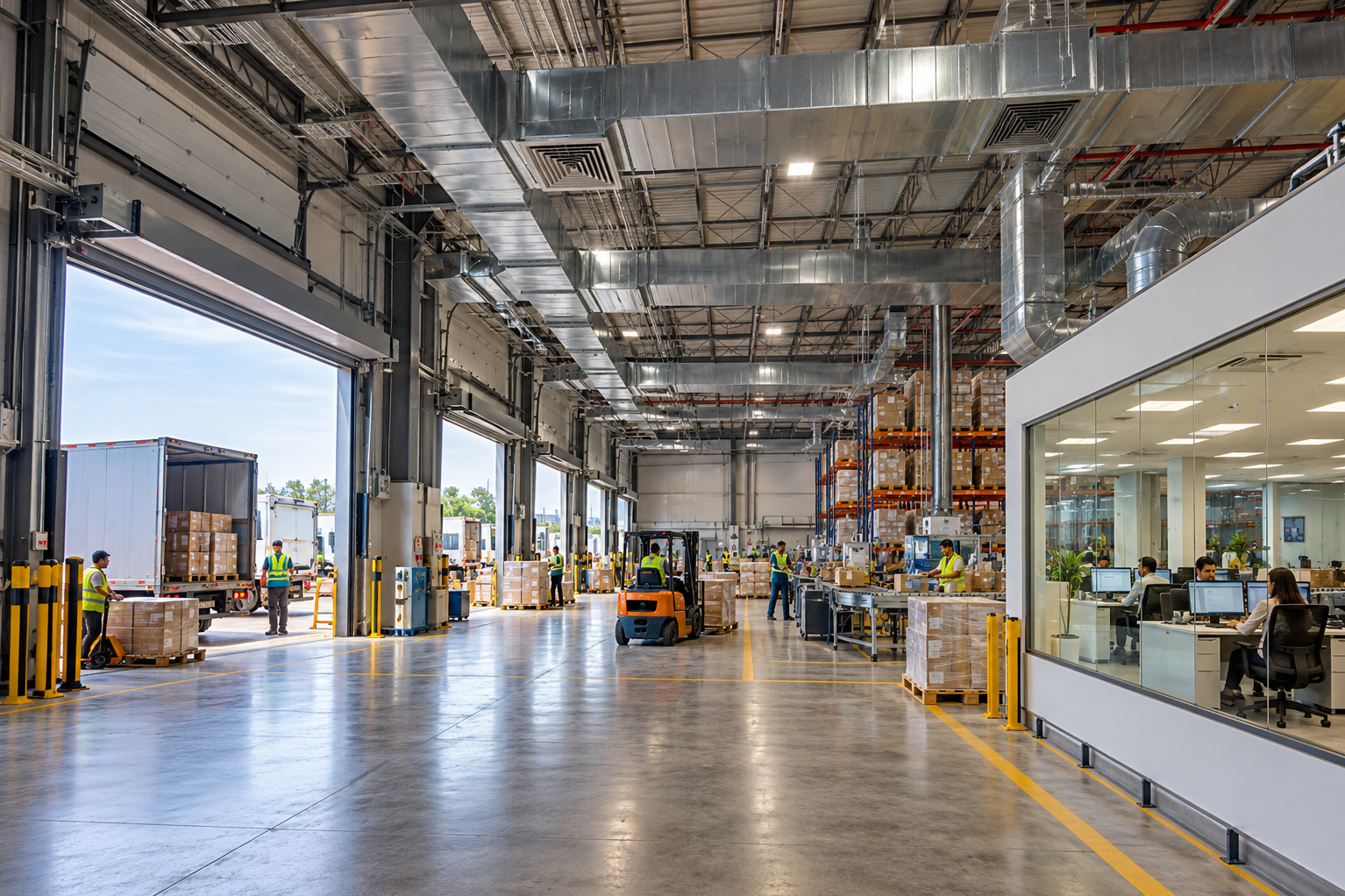
Cargo centres combine large building volumes, frequent door openings, changing occupancy, material-handling equipment, loading activity, storage areas, offices, and sometimes temperature-sensitive goods. These conditions can make indoor environmental control more complicated than it initially appears.
Effective HVAC Systems for Cargo Centres therefore require engineers to examine how the facility operates before defining cooling and ventilation strategies.
This is especially relevant to logistics and cargo projects serving Bangalore and Karnataka, where warehouse and distribution facilities may handle substantial daily movement while facing changing outdoor conditions and operational loads.
Large Spaces Can Hide Uneven Conditions
A cargo building may have a high ceiling and a large floor plate, yet workers occupy only specific areas.
Conditioning the entire volume uniformly may consume unnecessary energy. At the same time, poor air distribution can leave occupied zones uncomfortable even when installed HVAC capacity appears adequate.
Air stratification is another consideration. Warm air can accumulate at high level, particularly in tall buildings with substantial internal heat gains.
Engineers should therefore examine supply-air throw, return locations, occupied-zone requirements, ceiling height, and internal obstructions.
Loading Doors Change the Indoor Environment
Cargo centres frequently open large shutters and dock doors.
Every opening can allow outdoor air to enter, affecting temperature, humidity, pressure balance, and energy consumption. The impact depends on door size, opening duration, traffic frequency, wind conditions, and the difference between indoor and outdoor environments.
Operational solutions can include zoning, vestibule strategies, air curtains in suitable applications, fast-operating doors, and pressure management.
The right solution depends on how the facility functions.
Internal Equipment Adds Heat and Emissions
Material-handling operations can influence ventilation requirements.
Battery charging areas, equipment rooms, packaging zones, conveyor systems, lighting, and other machinery can generate heat. Certain activities may also require dedicated exhaust or ventilation strategies.
These loads should be identified during design rather than discovered after occupation.
Office Areas Need Separate Consideration
Many cargo facilities contain administrative offices, security rooms, control rooms, meeting spaces, and staff areas.
These spaces usually require different environmental conditions and operating schedules from the main cargo hall.
Separate HVAC zoning can prevent the office system from being tied unnecessarily to warehouse operating patterns.
System Selection Should Match Operating Hours
A logistics facility that operates around the clock has different lifecycle priorities from one operating only during business hours.
Equipment reliability, maintenance access, standby arrangements, control sequencing, and part-load efficiency become increasingly important as operating hours increase.
Facility managers should also consider whether maintenance can take place without interrupting cargo operations.
Coordination With Fire and Building Services Is Essential
Large cargo facilities often contain extensive fire-protection systems, smoke-management provisions, lighting, electrical distribution, conveyors, racks, and structural elements.
HVAC ducts and equipment must be coordinated with these systems.
For logistics projects in Bangalore, Arete Consulting Engineers can examine HVAC requirements alongside MEP and building engineering coordination so that service routes, equipment spaces, maintenance access, and operational requirements are considered together.
Well-planned HVAC Systems for Cargo Centres are based on movement patterns, building volume, loading activity, internal heat, occupancy, ventilation, and operating schedules. By addressing these variables early, project teams can create a more stable indoor environment without relying on excessive cooling capacity to compensate for unresolved operational issues.
Keywords