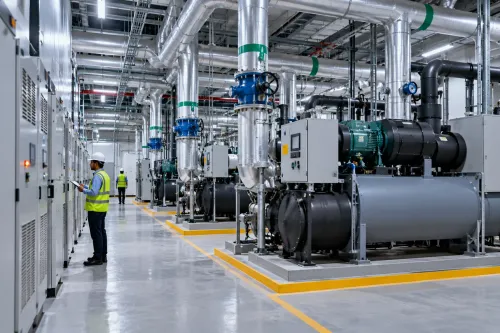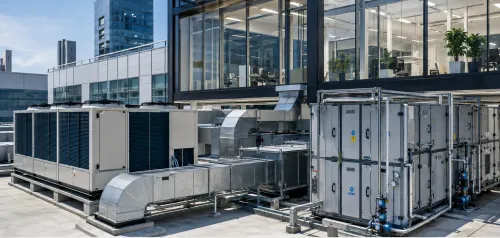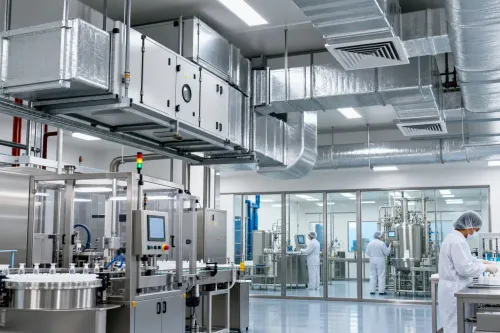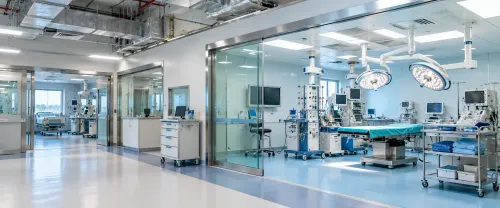
Industrial facilities operate under demanding conditions where temperature control, ventilation, and air quality directly influence productivity, worker safety, and equipment performance. Unlike conventional commercial air conditioning, Industrial HVAC Systems are engineered to support complex manufacturing environments with varying operational requirements.
Whether serving factories, warehouses, processing plants, or production units, industrial HVAC solutions play a critical role in maintaining stable working conditions throughout the year.
What Makes Industrial HVAC Different?
Industrial environments generate significant heat, airborne particles, fumes, moisture, and process-related contaminants. Standard comfort cooling systems cannot effectively manage these challenges.
Industrial HVAC systems are specifically designed to:
- Control process temperatures
- Remove excess heat
- Improve indoor air quality
- Manage humidity
- Reduce airborne contaminants
- Support equipment reliability
- Enhance worker comfort
The engineering behind these systems focuses equally on operational efficiency and industrial process requirements.
Industries That Depend on Industrial HVAC
Numerous industries rely on specialized HVAC solutions, including:
- Pharmaceutical manufacturing
- Food processing
- Electronics production
- Automotive manufacturing
- Textile industries
- Chemical processing
- Data centres
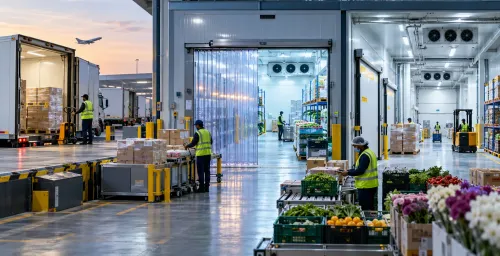
- Warehousing and logistics
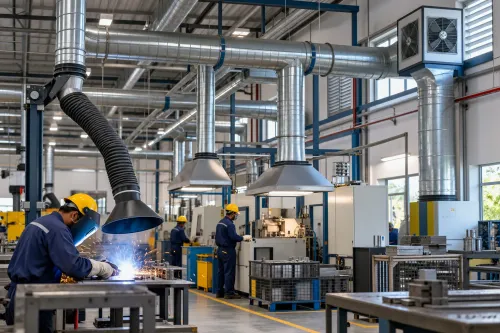
- Engineering workshops
Each facility requires customized airflow patterns, ventilation rates, and environmental controls.
Key Components of an Industrial HVAC System
A complete industrial HVAC setup generally includes:
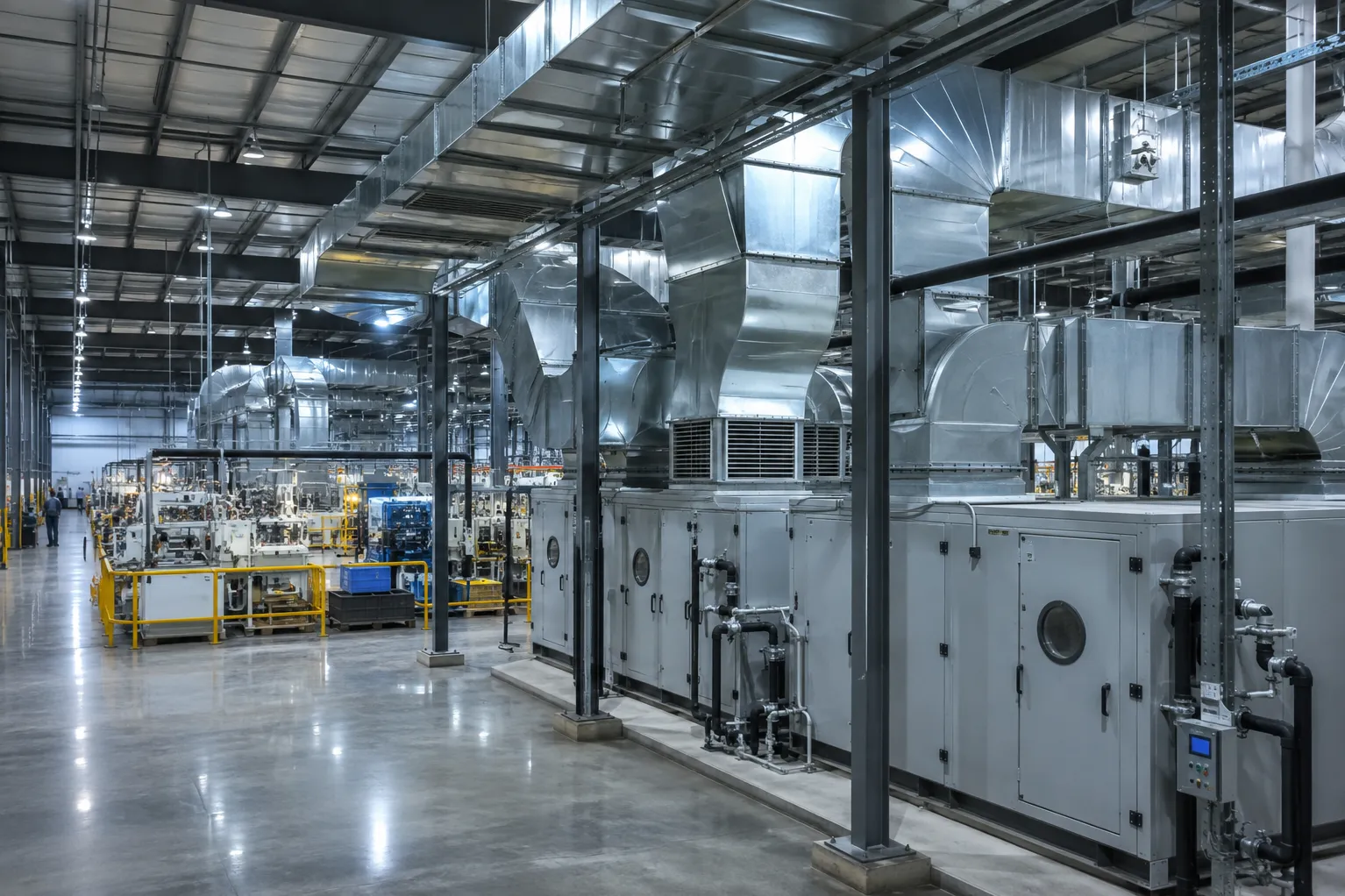
- Air handling units
- Industrial chillers
- Ventilation equipment
- Exhaust systems
- Cooling towers
- Duct networks
- Filtration systems
- Variable air volume controls
- Building automation systems
These components work together to maintain consistent environmental conditions while minimizing energy usage.
Common Challenges in Industrial Facilities
Manufacturing plants often encounter issues that require specialized engineering solutions.
Examples include:
- Excessive heat from machinery
- Dust accumulation
- Chemical vapours
- Uneven air circulation
- High humidity
- Corrosion risks
- Rising energy bills
- Frequent equipment downtime
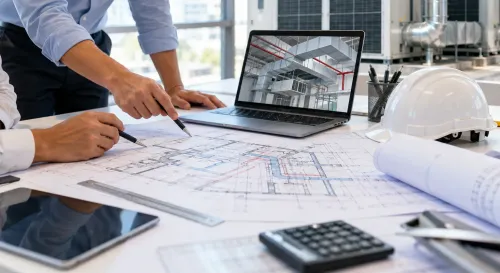
Addressing these challenges requires accurate load calculations and carefully engineered ventilation strategies rather than simply installing larger cooling equipment.
Why Proper System Design Matters
A poorly designed HVAC system can create operational problems that affect both production quality and employee comfort.
Effective engineering helps achieve:
- Uniform temperature distribution
- Better process control
- Lower maintenance requirements
- Reduced energy costs
- Compliance with industrial safety standards
- Improved equipment lifespan
Design decisions made during the planning phase often determine long-term operating efficiency.
Energy Efficiency Is Becoming a Priority
Manufacturers are increasingly seeking ways to reduce operational expenses without compromising production quality.
Modern industrial HVAC solutions often incorporate:
- Variable frequency drives
- Heat recovery systems
- High-efficiency motors
- Demand-based ventilation
- Smart monitoring systems
- Automated controls
These technologies improve performance while reducing electricity consumption.
Industrial HVAC Planning in Bangalore
Bangalore has become a major hub for manufacturing, technology, biotechnology, aerospace, and industrial development. As facilities continue to expand across Karnataka, demand has grown for HVAC systems that meet both productivity and sustainability objectives.
Engineering consultants with experience in industrial environments understand regional climatic conditions, applicable regulations, and the operational needs of different manufacturing sectors.
Companies such as Arete Consulting Engineers support industrial developments by providing integrated HVAC engineering alongside electrical, fire protection, and public health engineering services. This coordinated approach helps industrial projects move efficiently from design through execution.
Industrial HVAC Systems are far more than climate control solutions. They create stable operating environments that protect equipment, improve worker safety, support production quality, and reduce long-term operating costs. Careful engineering ensures manufacturing facilities remain productive, compliant, and prepared for future expansion.
Keywords