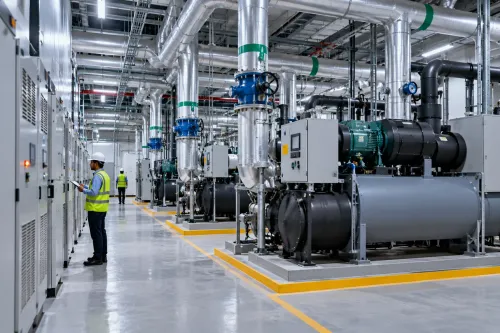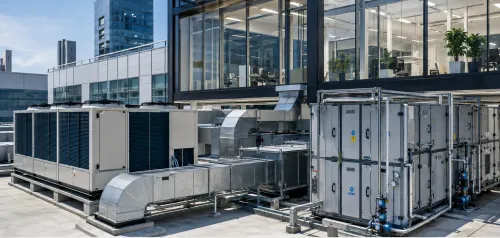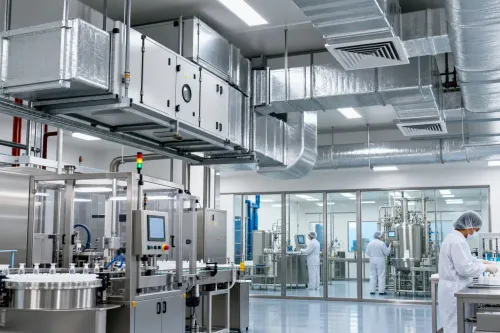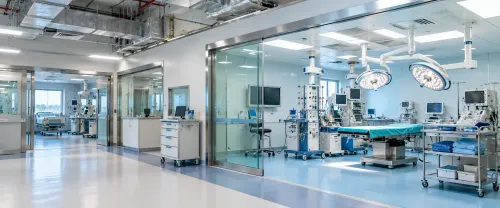
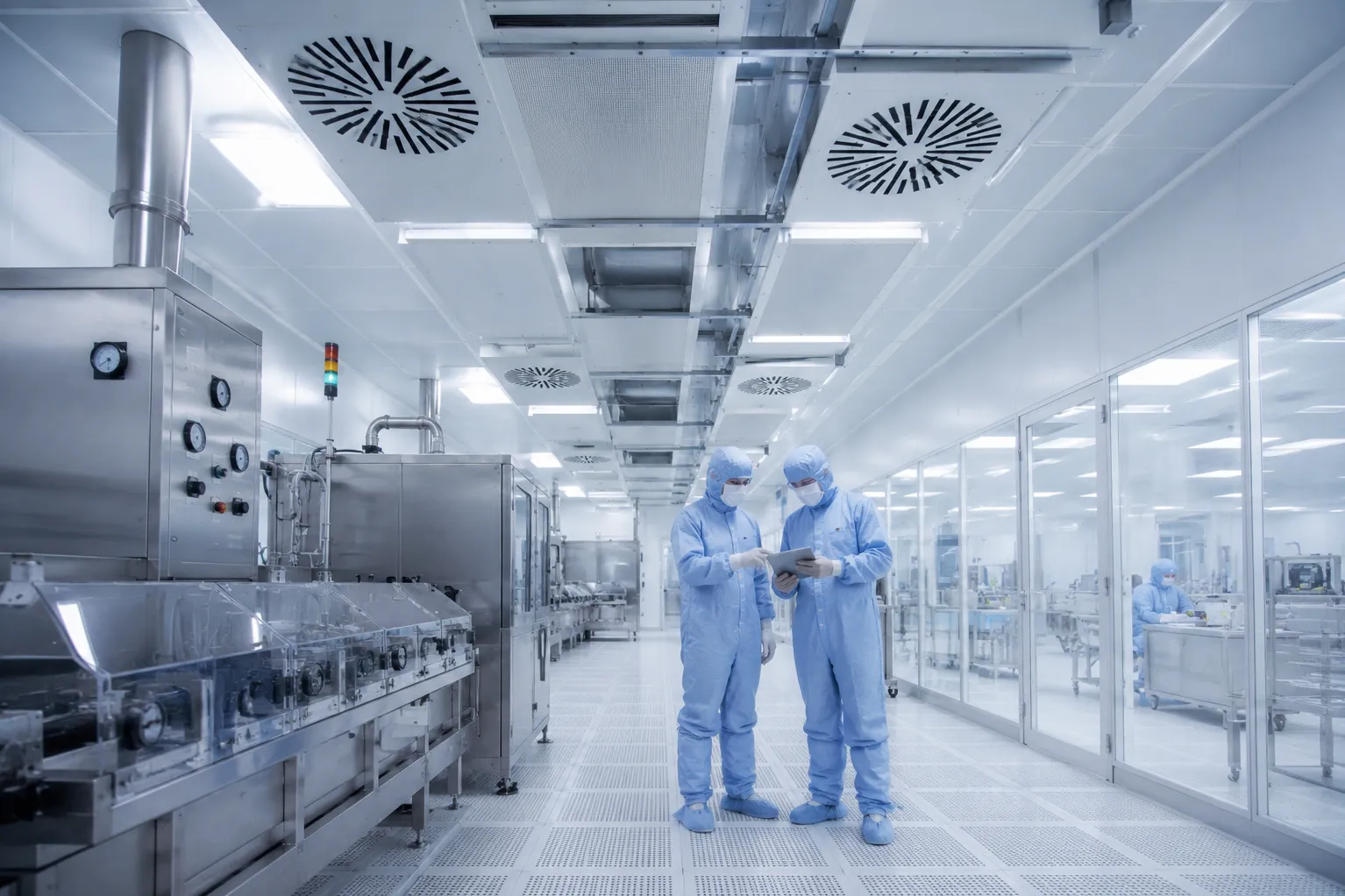
A clean room is an engineered environment in which airborne contamination and other environmental parameters are controlled according to the needs of the process. HVAC therefore becomes one of the fundamental systems supporting clean-room performance.
Unlike ordinary comfort cooling, Clean Room HVAC Systems may need to address particle control, pressure relationships, airflow patterns, temperature, humidity, filtration, air-change requirements, and continuous monitoring.
This is particularly relevant to pharmaceutical, healthcare, biotechnology, electronics, research, and specialised manufacturing projects in Bangalore and across Karnataka.
Cleanliness Begins With Controlled Air
Ordinary HVAC systems are primarily designed around occupant comfort and indoor air quality. Clean-room HVAC has an additional objective of maintaining the environmental conditions needed by a controlled process.
Air passes through selected filtration stages before entering the room. The filtration approach depends on the clean-room classification, process requirements, applicable standards, and risk assessment.
The complete air path needs consideration, including supply, return, exhaust, recirculation, and leakage between adjoining spaces.
Pressure Relationships Help Manage Air Movement
Clean-room suites often include spaces with different cleanliness requirements.
Pressure differentials can be used to influence the direction in which air moves between adjoining areas. This helps support the contamination-control strategy established for the facility.
Maintaining these relationships requires coordinated attention to supplied air, returned air, extracted air, door openings, room leakage, and control sequences.
Temperature and Humidity May Affect the Process
Clean-room conditions are not determined solely by what feels comfortable to occupants.
Temperature and relative humidity can influence manufacturing processes, product stability, equipment performance, static electricity, materials, and personnel working conditions.
Design values should therefore come from process requirements and relevant standards rather than being copied from a conventional office HVAC specification.
Air Changes Require Engineering Evaluation
Increasing airflow indiscriminately is not necessarily good design.
Higher airflow can increase fan energy, cooling requirements, filter pressure drop, noise, and operating costs. Engineers need to establish airflow based on the clean-room classification, contamination-control concept, heat load, process requirements, and applicable guidance.
The objective is controlled performance, not simply maximum airflow.
Equipment Selection Affects Long-Term Performance
Air-handling equipment for clean environments needs to be selected with operational and maintenance requirements in mind.
Important considerations may include:
- Filtration configuration
- Coil performance
- Fan characteristics
- Casing integrity
- Drainage
- Access for cleaning
- Sensor locations
- Control capability
- Maintainability
Service access is especially important because clean-room HVAC systems require ongoing inspection and maintenance.
Controls Provide Visibility
Building automation can help monitor critical environmental parameters and equipment conditions.
Depending on the project, this may include temperature, humidity, differential pressure, fan status, filter condition, and alarms.
Monitoring does not replace sound HVAC design, but it provides operators with information needed to identify deviations and investigate system performance.
Arete Consulting Engineers works across HVAC, refrigeration, building automation, and MEP engineering, allowing clean-room requirements to be coordinated with the wider facility infrastructure.
For projects in Bangalore's pharmaceutical, technology, healthcare, and advanced manufacturing sectors, clean-room HVAC should be considered early in the design process. Room layouts, pressure cascades, equipment locations, ceiling systems, utilities, and maintenance routes all influence the final engineering solution.
A clean room performs as a complete system. HVAC is a major part of that system, but successful environmental control also depends on architecture, process planning, operating procedures, commissioning, and disciplined facility management.
Keywords