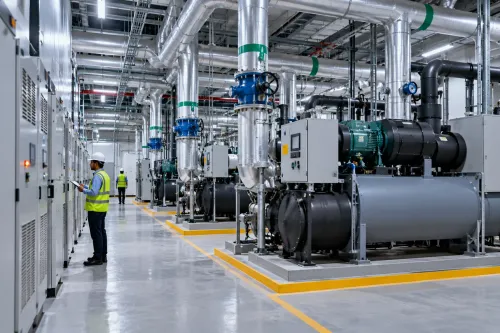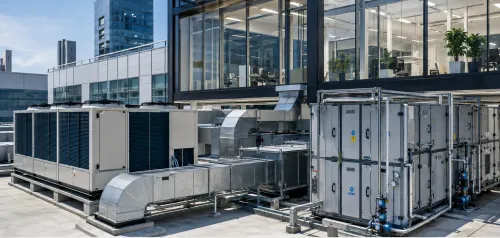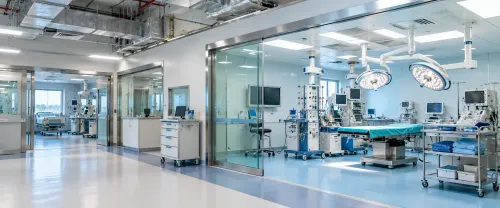
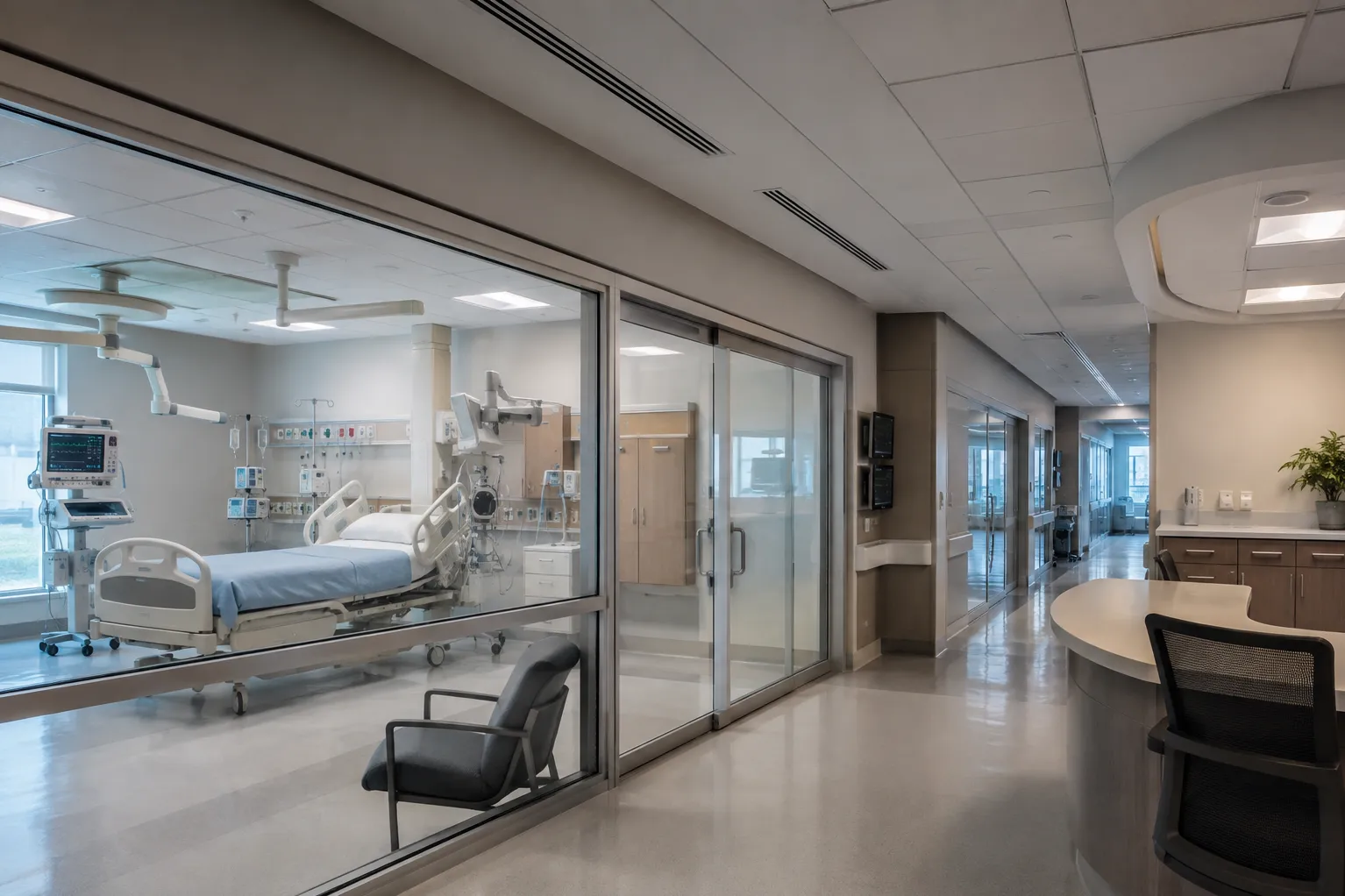
Healthcare projects involve building systems that directly support clinical spaces, staff operations, patient environments, medical equipment, and around-the-clock facility functions. Choosing Healthcare Engineering Services therefore requires a broader evaluation than reviewing an engineering consultant's general building portfolio.
Hospitals, diagnostic centres, day-care facilities, and specialist healthcare developments in Bangalore and across Karnataka need coordinated engineering that reflects how clinical spaces will actually operate.
Check Relevant Healthcare Experience
General MEP experience is valuable, but healthcare facilities present additional complexities.
Ask whether the engineering team understands environments such as operating areas, isolation spaces, laboratories, intensive care units, diagnostic departments, pharmacies, sterile processing areas, and patient wards.
Relevant experience helps the consultant identify design considerations that may otherwise emerge late in the project.
Review the Approach to HVAC Zoning
Hospitals cannot usually be treated as one uniform air-conditioned building.
Different clinical areas can require distinct approaches to airflow, filtration, pressure, temperature, humidity, ventilation, and exhaust.
A capable consultant should be able to explain how clinical functions are translated into engineering zones and how those zones interact with adjacent areas.
Examine Multidisciplinary Coordination
Healthcare ceilings and service shafts can contain numerous building systems.
HVAC, electrical distribution, plumbing, fire protection, medical gases, lighting, data systems, and specialist clinical services all compete for limited space.
Ask how coordination is handled during design development. Identifying clashes digitally and through coordinated drawings can reduce expensive site changes later.
Assess Reliability Planning
Many healthcare services operate continuously.
The engineering design should therefore evaluate the consequences of equipment failure in critical areas. Depending on the application, this may influence redundancy, electrical backup, equipment zoning, controls, alarms, and maintenance strategies.
Rather than simply asking whether redundancy is provided, project teams should understand which services are considered critical and why.
Look at Energy Performance
Healthcare facilities can have substantial energy requirements because of long operating hours, ventilation needs, filtration, cooling loads, and specialist equipment.
Energy efficiency should therefore be considered without compromising required clinical conditions.
Potential measures depend on the project but may include efficient equipment selection, variable-speed operation, zoning, appropriate controls, optimised air distribution, and heat-recovery strategies where technically suitable.
Ask About Building Automation
A hospital facility team needs clear visibility into essential systems.
Building automation may monitor HVAC equipment, temperatures, humidity, pressure relationships, alarms, operating schedules, and other selected parameters.
The consultant should consider what information facility managers genuinely need rather than creating an unnecessarily complicated interface.
Consider Commissioning From the Design Stage
Complex building systems need to perform in practice, not merely look correct on drawings.
Design documents should support testing, balancing, commissioning, and verification. Access for sensors, dampers, filters, valves, equipment, and measuring points should also be considered.
Arete Consulting Engineers provides multidisciplinary expertise across HVAC, MEP, refrigeration, automation, and building-services engineering. For healthcare developments, this integrated capability can help address interfaces between clinical requirements and the engineering systems supporting them.
When evaluating consultants in Bangalore, developers and hospital project teams should look beyond consultancy fees alone. Relevant project understanding, multidisciplinary coordination, documentation quality, lifecycle thinking, and commissioning readiness can have a significant influence on how effectively the facility performs after handover.
Keywords